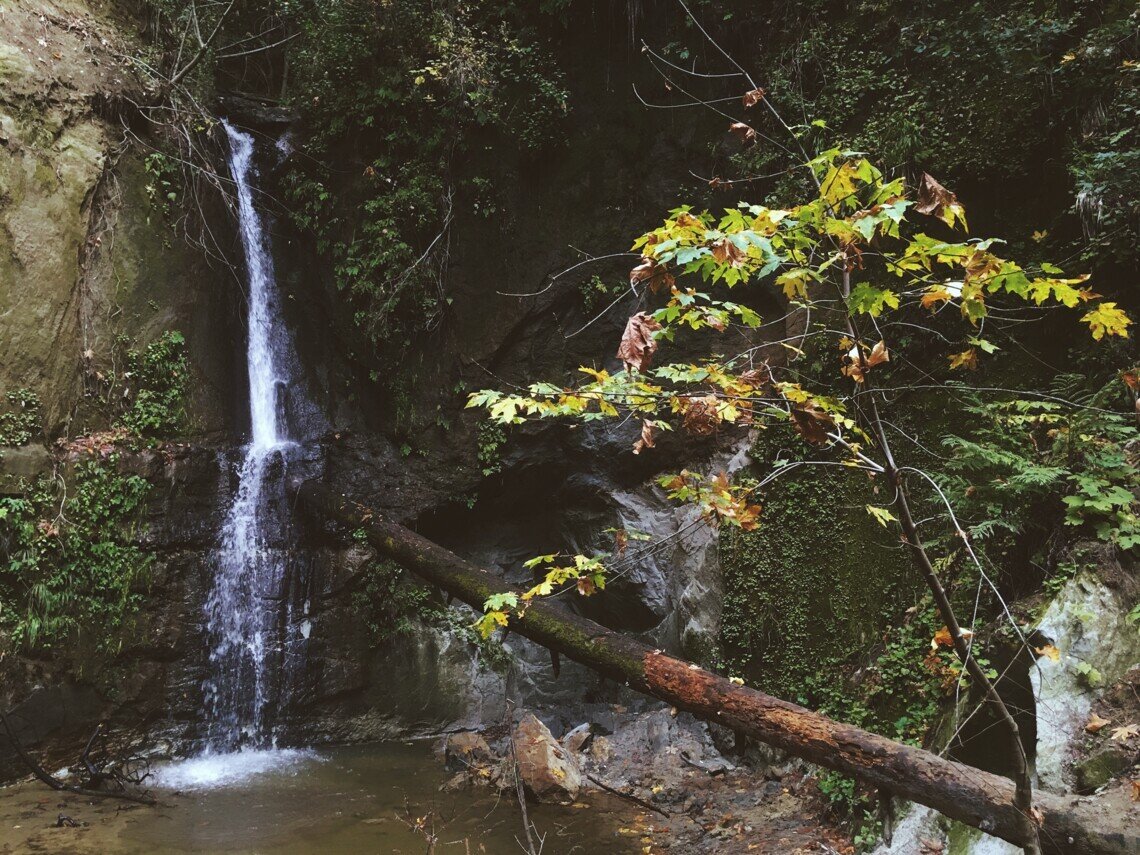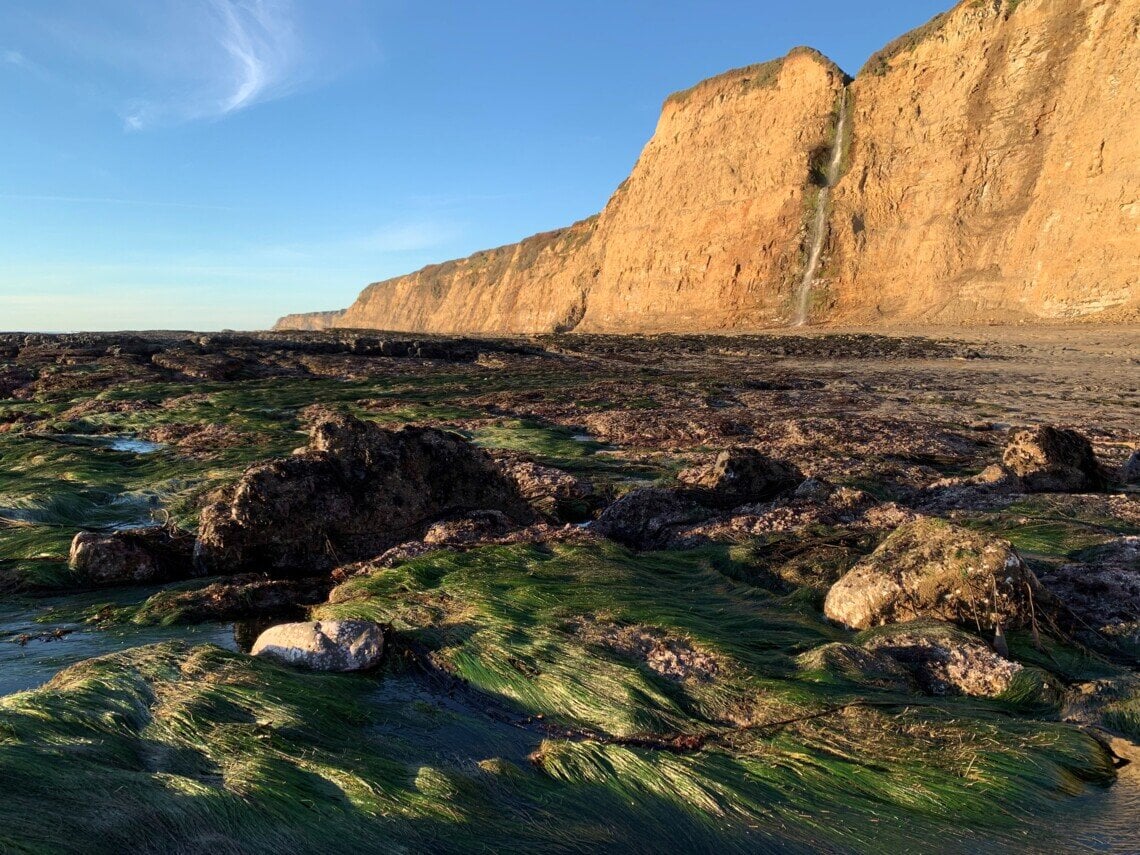
Outdoor adventurers and nature enthusiasts love to explore the beauty of the Santa Cruz Mountains. Hiking through old-growth redwood forests or to mountaintop ocean vistas, the many state parks and open spaces in the county provide endless exploration for visitors and locals alike. Love a good hike along a wild river or babbling brook? Check out a few of our favorites in the Santa Cruz Mountains, including one that leads to a 30-foot waterfall.
Skill level: Beginner to Intermediate – Many hike options, but creek access as close as 0.6 miles from parking lot. Fall Creek Trail to South Fork Trail leads to the Lime Kilns after 1.5 miles. Great for young hikers, but longer and higher elevation hikes are also available.
Skill level: Beginner to Intermediate — Aptos Creek is never far away on this redwood-shaded hike to a strange grove of twisted trees. During winter the seasonal bridge comes down, so be prepared for a crossing or a shorter hike.
Skill level: Beginner — The 1.5-mile River Trail follows the river past beaches and towering redwoods to the bend at Cable Car Beach. It closely tracks paved Pipeline Road, for those who prefer road walking. And everyone’s seasonal favorite: this walking bridge suspended over the river! (Typically opens mid to late-May through first storms of fall/winter)
Skill level: Beginner to Intermediate –Pogonip features approximately 8 miles of beautiful hiking trails, but one favorite is the Spring Box Trail where you’ll find an unexpected spring-fed koi pond tucked beneath a redwood tree. One option to reach the koi pond is by taking a 3 mile trek beginning on the Spring Trail to Spring Box Trail. Just before the intersection with Lime Kiln Trail, there’s a small unmarked path to the right that loops through some old-growth redwoods. Under one of the redwoods you will find the spring-fed koi pond. *Please DO NOT touch the fish or disrupt them.
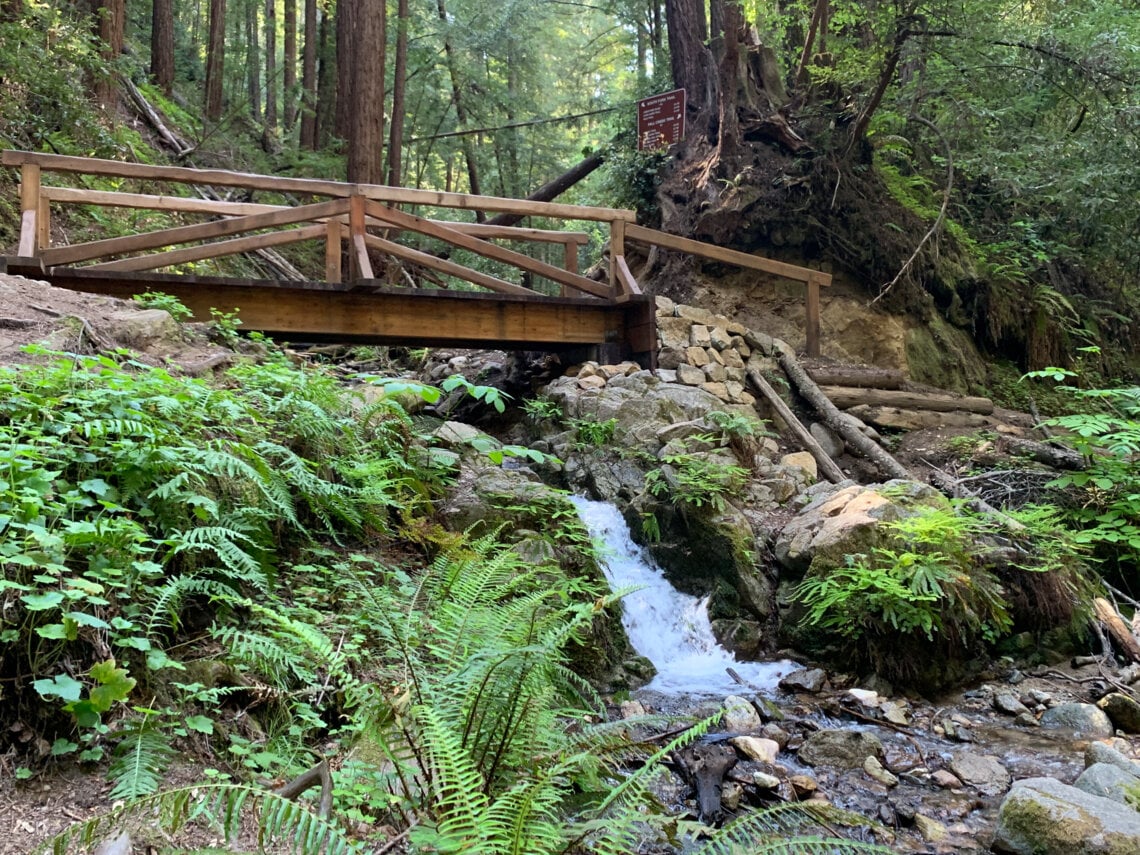
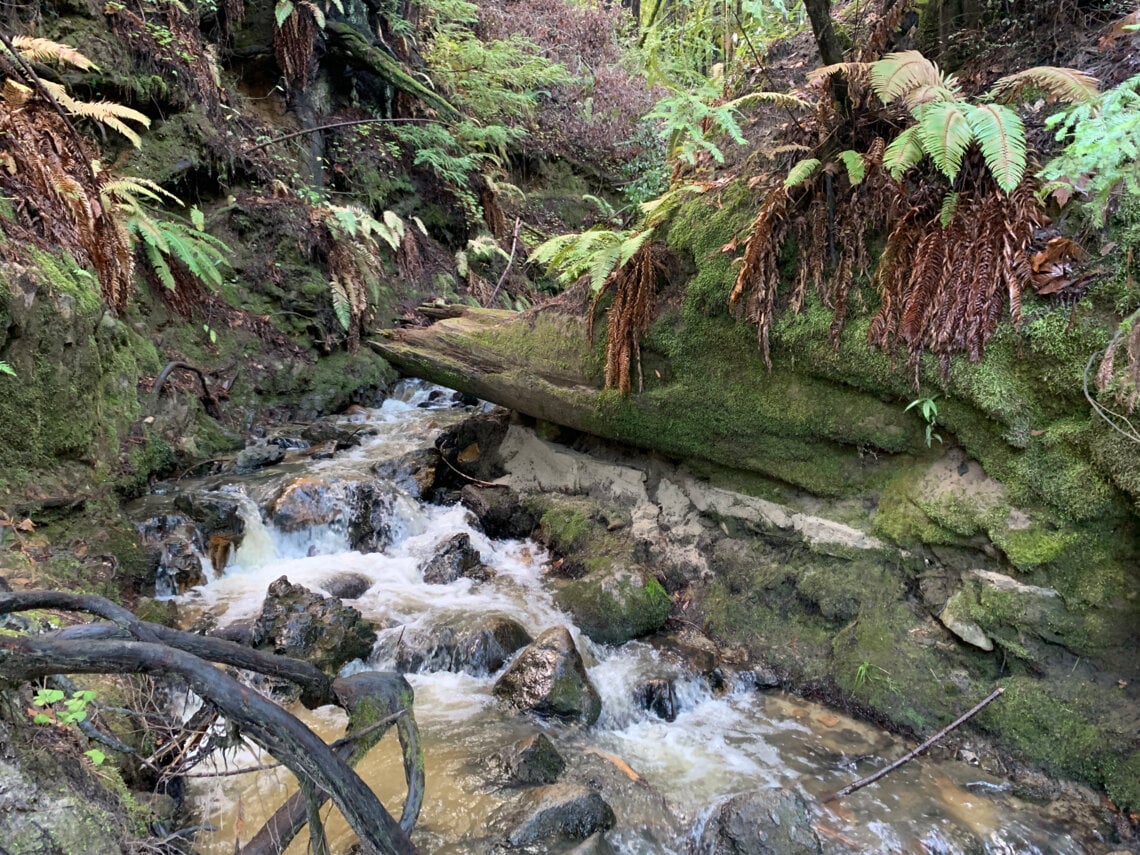
Skill level: Intermediate – Approximately 8.5-mile hike along abandoned railbeds and trails tracking Aptos Creek. Be prepared for several creek crossings on the way to this 30-foot waterfall.
SEASONAL: Loch Lomond is open Thursday through Tuesday (closed Wednesdays) from March 1st through Labor Day and then only on the weekends through mid October. Skill level: Beginner to Intermediate— Most of the redwood- and oak-shaded trails along the reservoir banks are fairly gentle, but footing can tricky in places. Loch Trail and Highland Trail can be combined for a 5-mile loop with good views and elevation gain.
Located in Davenport, where the Pacific Ocean meets rolling coastal grasslands, lies a place with stories as deep as its redwood roots: Cotoni-Coast Dairies (pronounced Chuh-toe-knee). Part of the 5,800-acre on-shore unit of the California Coastal National Monument, Cotoni-Coast Dairies is both a wild refuge and living history.
The land carries the name of the Cotoni, the indigenous people who called these hills and meadows home long before Europeans arrived. The Bureau of Land Management now cares for this place, and it’s clear they have worked hard to preserve the heritage of all those who have called this land home – human and animal alike. Here, perennial streams wind down from the redwood-forested Santa Cruz Mountains, weaving through shady oak woodlands and sunlit prairie before spilling into the ocean. The Cotoni Coast’s diverse topography makes for a biologically rich mosaic of ecosystems. Redwoods stretch skyward, hawks soar overhead, and freshwater streams sustain fish and flow onward to nourish the city of Santa Cruz and its neighbors. For visitors, hikers, bikers, and nature lovers alike, Cotoni-Coast Dairies offers an opportunity to experience the wild beauty of the California Central Coast.
Trails
With over 8 miles of trails lovingly built by Santa Cruz Mountains Trail Stewardship, a local non-profit, the Cotoni Coast-Dairies are waiting to be discovered! One trailhead leads from the parking lot to all other paths, which are organized as a stack of loops, each feeding into the next. This means that to get to the most challenging trail, you’ll need to traverse the two other trails, both on your way in and on your way out. Whether you’re hiking, biking, or riding horseback (permit required), each path offers its own distinctive encounter with the land. Two of the pathways are dog-friendly, just be sure to keep your furry friends on leash!
A hot tip: when hitting the trails, be prepared to encounter poison oak along the way.
Easy – Hawk / Káknu (2.5 mile loop) The first path you’ll encounter is the Hawk Trail—in Cotoni, Káknu (pronounced KAHK-noo). This 2.5-mile beginner-friendly loop meanders through the coastal prairie, where cattle graze in tall, swaying grasses and the ocean shimmers endlessly on the horizon. Beneath the sweep of a vast sky, it’s easy to understand why the hawk takes to the air. With its wide tread, the trail is certified for adaptive mountain biking and welcomes hikers and on-leash dogs alike.
Moderate – Tree / Huyya (1.6 mile loop) The next loop along the way weaves into a forest, the path narrowing as you become dwarfed by the majestic redwoods towering above. Appropriately named the Tree Trail, Huyya (HOO-yah) in Cotoni, this 1.6-mile moderate trail made for hiking and biking provides relief from the elements and cooling shade under the cover of the ancient trees. It’s on-leash dog-friendly, too! As you make your way through the woods, a quiet bench offers a perfect pause to glimpse the ocean framed by the forest canopy.
Challenging: Wildcat / Toróma (4 mile loop) Those seeking a challenge should head out to the Wildcat Trail – Toróma (toh-ROH-mah) in Cotoni- which stretches 4 miles and reaches the highest points in the park. The ascent rewards with panoramic views, but it’s a journey that demands preparation: bring ample water, snacks, and time. The moderate/difficult-rated trail was created for hikers and bikers only, so please leave your four-legged friends on the other trails. At the summit of the plateau, the view rivals the unforgettable memories formed along the way.
Know Before You Go
Cotoni-Coast Dairies is open seven days a week, sunrise to sunset. You’ll find the trailhead at: 1 Cement Plant Rd, Davenport, CA 95017
Parking: 62 spaces available
Restrooms: Located near the trailhead
Water: There is none on-site – bring your own, and plenty of it!
Essentials: Sunscreen, snacks, and good shoes
Wildlife: Cattle graze across the property – share the space with respect to the animals!
Be prepared and download trail maps ahead of time!
To explore the trails of Cotoni-Coast Dairies is to move through layered histories: those of the Cotoni people, of the forest and sea, and of today’s stewards working to keep these lands open for all. Thanks to the dedicated efforts of the Bureau of Land Management and Santa Cruz Mountains Trail Stewardship in restoring and building these trails, they are now accessible for the public to enjoy every day of the week. Here, every step tells a story, and every visit becomes part of the ongoing legacy of this incredible landscape.
The Santa Cruz area offers a rich array of natural beauty and an endless supply of gorgeous hiking trails. From coastal trails to forest treks, some of the best hikes in Santa Cruz County are waterfall hikes! Whether you’re visiting in the winter when the water is rushing or in summer when the rainfall lessens, these five waterfall hikes feature year-long running water for you to enjoy.
1. ) Fall Creek, Henry Cowell Redwoods State Park
Distance: ~3-5 miles
Difficulty: Beginner to Intermediate
The Fall Creek sector of Henry Cowell State Park has the perfect waterfall hike for adventurers of all ages since the park offers a wealth of trail options with waterfalls at different points along the trek. Whether you have little kids and only want to do the out-and-back flat portion of the trail, or if you’re an advanced hiker looking for a challenge by hiking the full loop or even the recently reopened trails up to Big Ben, this park is full of great options for hikers of all levels. To get to this waterfall, park at the main Fall Creek parking lot and follow the Bennet Creek Trail to the South Fork Trail. This route will take you to the top of the trail, where a natural spring-fed waterfall comes directly from the forest floor under the ruins of old lime kilns.
2. ) Eagle Creek Falls, Henry Cowell Redwoods State Park
Distance: ~3 miles
Difficulty: Beginner to Intermediate
Henry Cowell Redwoods State Park has countless awesome trails for hikers of all levels, and you can combine this waterfall hike with so many other trails to create the perfect customizable hike for your level. To get to the Eagle Creek Waterfall, you can begin at the visitor center and either start on the first half of the Big Trees Loop or follow the River Trail directly to the base of Eagle Creek. The waterfall cascades down the hill from a babbling brook into the San Lorenzo River. Hiking the River Trail to the base of Eagle Creek and back is the perfect flat hike for people with young kids or beginning-level hikers. If you’re feeling adventurous, you can hike all the way up along Eagle Creek and loop back on any of the numerous trails that lead back to the visitor center.
3. ) Maple Falls, The Forest of Nisene Marks State Park
Distance: ~8 miles
Difficulty: Intermediate
Among the endless trails in The Forest of Nisene Marks State Park, Maple Falls has to be one of the best! This intermediate-level hike varies in distance depending on which parking lot you begin your hike. From the entrance kiosk parking lot, it is approximately 10 miles, but from the farther Porter Family Picnic Area, it is about 8 miles round trip on this out-and-back trail to the waterfall. On this hike, you weave deep into the redwood forests along Aptos Creek, following the Loma Prieta Grade Trail to the Bridge Creek Trail. Please note that there are several small streams you must cross at the end of this trail, so come prepared with proper footwear!
4. ) Scott Creek Beach Waterfall
Distance: ~2 miles
Difficulty: Beginner
NOTE: This waterfall can only be reached at low tide, so be sure to check tidal charts before attempting to reach this location.
Just north of Santa Cruz along Highway 1 is Scott Creek Beach. This rugged coastal beach has a main sandy beach area, but if you head north on the beach, you can walk under the cliffs when the tide is low to discover this cascading waterfall. Since there is no official trail to follow to find this awesome spot, you must walk along the beach until you reach the cliffs and keep going until you spot the waterfall about a mile out! Depending on the time of year, you may have to cross a river to reach this area. Please be sure to visit only during low tide when it is safe to walk out onto the rocks because this area is inaccessible during high tide.
5. ) Castle Rock State Park Waterfall
Distance: 1.2 miles
Difficulty: Beginner-Moderate
High up in the Santa Cruz Mountains is the expansive Castle Rock State Park, which has a 70ft waterfall. From the main parking lot, you will descend the 1.2-mile out-and-back trail down to the waterfall viewing platform, where you get a great view of the surrounding mountains as you look down on the falls. During the summer, the waterfall is often reduced to a trickle, but the view is still well worth the hike down to this beautiful spot. If you want the full effect of this natural waterfall, definitely hike here in the winter after a good rain!
Remember to come fully prepared for all hikes by carrying adequate water, wearing proper hiking attire, and for coastal hikes, always remember to check tides to ensure you don’t get stuck somewhere if the tide comes in quickly. When visiting these gorgeous natural wonders, be sure to pack your trash and leave no trace. Restrooms and trash cans may not be readily accessible at these locations, so be prepared to pack out any trash you bring in with you. Help us preserve the beauty of these places by respecting the environment and recreating responsibly.
Header image by Caryn Hewlett; all other photos by Monica Multer
As the crisp air of autumn settles in, Santa Cruz County transforms into a picturesque haven for nature lovers. Whether you’re craving a peaceful stroll beneath vibrant canopies or a challenging hike through golden-hued forests, this coastal region has plenty to offer. While known for the evergreen of our redwood forests, Santa Cruz County has gorgeous pockets of color that visitors and locals alike love. From trails lined with towering redwoods and autumnal maple trees to scenic natural spaces sprinkled with fall foliage, here are some of the best spots to experience the beauty of autumn in Santa Cruz County. Lace up your boots, grab your camera, and get ready to explore the season’s changing colors!
Historic Downtown – Walnut Avenue and Beyond
For a more urban autumn experience, take a stroll through historic downtown Santa Cruz, where the tree-lined streets come alive with vibrant fall colors. Walnut Avenue and the surrounding streets offer a charming setting for an afternoon walk, with golden leaves fluttering down from towering maples and sycamores. Enjoy your neighborhood stroll by grabbing a warm seasonal autumn drink from 11th Hour or Verve Coffee and then set out to explore the mix of quaint shops, historic architecture, and seasonal displays that create the perfect cozy, autumnal vibe. Enjoy the crisp air, and take in the beauty of fall without leaving the heart of the city.
Fall Creek – Lime Kiln Trail
For those seeking a true immersion in nature, Fall Creek is the ultimate fall hiking destination in Santa Cruz County. Nestled within Henry Cowell Redwoods State Park, this serene trail takes you along the banks of a tranquil river, surrounded by a canopy of trees that burst into vibrant shades of gold and orange as autumn unfolds. The peaceful sound of the creek adds to the ambiance as you make your way through towering redwoods and past the historic lime kilns, remnants of the area’s industrial past. With its blend of lush fall foliage, serene water views, and fascinating history, Fall Creek offers a perfect escape to embrace the beauty of the season.
Henry Cowell State Park – River Trail and Eagle Creek
Another top spot for enjoying fall foliage is the River Trail and Eagle Creek in Henry Cowell Redwoods State Park. This trail offers a peaceful hike alongside the San Lorenzo River, where the banks are lined with trees that burst into fiery hues of red, yellow, and orange as autumn sets in. The gentle sound of the river flowing by and the crisp autumn air make for an idyllic experience. Along the way, keep an eye out for forest creatures like newts and banana slugs, who come out to enjoy the cooler weather. This trail beautifully combines fall colors with the rich biodiversity of the forest, making it a must-visit for an autumn hike.
Bamboo Giant Nursery
For a peaceful and unique autumn stroll, head to Bamboo Giant Nursery in Aptos. This hidden gem offers a tranquil escape with winding paths through towering groves of bamboo. Although smaller in scale, it’s a perfect spot to explore with kids, allowing them to discover the magic of the season in a serene, safe environment. A highlight of the nursery is the gentle pond and waterfall, where you can sit and enjoy the calming sound of water trickling by. The lush greenery and quiet ambiance make this a relaxing place to slow down, reflect, and take in the beauty of autumn in an unexpected setting. It’s an ideal location for a family-friendly stroll that’s both peaceful and rejuvenating.
UCSC Arboretum
The UCSC Arboretum is another ideal spot for a fall stroll in Santa Cruz County. Known for its diverse plant collections, the Arboretum comes alive in autumn with an array of colors and textures. As you wander through the gardens, you’ll encounter brilliant fall foliage, especially in the Australian and South African gardens, where unique plants showcase seasonal hues. The leisurely paths wind through vibrant landscapes, offering stunning views of the surrounding hills and ocean. It’s a perfect place to enjoy a quiet, reflective walk, whether you’re admiring the rare plant species or simply soaking in the beauty of the changing season.
Maple Falls
For an adventurous fall hike, Maple Falls in The Forest of Nisene Marks State Park is a must-visit destination. This challenging trail takes you deep into the forest, where you’ll be surrounded by towering redwoods, lush ferns, and striking fall foliage. As autumn settles in, the maples along the trail transform into vibrant shades of gold and orange, creating a stunning contrast against the evergreens. The hike culminates at the picturesque Maple Falls, where the cascading water adds to the striking beauty of the season. Though it’s a more demanding trail, the rewards of breathtaking scenery and the peaceful sounds of the forest make it one of the best fall hikes in Santa Cruz County.
Santa Cruz County is home to rugged coastline, majestic redwoods, scenic trails, and secret beaches making it the premier destination for your next hiking adventure! Join us as we go through our Top 5 picks for hiking!
MOST DIVERSE HIKE
What:Wilder Ranch State Park Grasslands, oaks, knobcone pines, coastal redwoods, douglas firs, rugged coastline, tidepools, hidden beaches, Victorian farmhouse, barns — need we say more? Wilder Ranch boasts a wide assortment of terrain and habitat, and offers over 34 miles of hiking, biking and equestrian trails winding through coastal terraces and valleys.
Walk: By far, one of the most scenic spots to hike is the Old Cove Landing Trail to Ohlone Bluff Trail, a 2 ½ mile coastal trek that is one of the prime spots for wild flowers. You can access the beach from here and walk along the bluff leading to the cove.
Factoid: The Old Cove Landing Trail is packed regularly to be wheelchair accessible – but weather and wear is something to consider. On a good day you will come across gulls, pelicans, geese, sea lions passing, and maybe even migrating whales. The park grounds also include restored Victorian homes, barns, shops, gardens, and a historic adobe for visitors.
Pro tip* Bring a jacket on this hike, as the coast can get a little breezy.
BEST HIKE FOR FAMILIES
What: Henry Cowell Redwoods State Park Whether you’re a family with tiny tikes or tough teens, Henry Cowell has a trail for you and yours. The main park area features 15 miles of hiking and riding trails through a variety of forested areas with redwoods, mixed evergreens, ponderosa pines, and even sandhills. Some park trails run alongside the San Lorenzo River.
Walk: For stroller riders and little legs, try the Redwood Grove Loop. This one mile path is a breeze for hikers, but doesn’t skimp on impressive encounters with redwood giants. For slightly older kids – not in need of a stroller – take the River Trail for a scenic hike with great rewards – i.e. some water play!
Factoid: Did you know that there is a northern section of Henry Cowell called Fall Creek with additional hiking trails? Although not stroller friendly, this is another great option for families looking to enjoy the forest and some creek exploration. Bonus: Banana slugs and newts are common on these trails.
Pro tip* Leave a change of clothes or towel in the car for the little ones. The streams, river and creeks sure are tempting!
BEST SEASIDE HIKE
What:West Cliff Drive Although not considered a traditional “hike,” West Cliff Drive delivers on some serious strides with seaside views. Bustling beaches and surf spots to tranquil coves and wildlife, this coastal path serves up some breathtaking vistas.
Walk: Begin your 6 mile round trip trek near the Santa Cruz Dream Inn and let the Monterey Bay be your trail guide. Pass the famed Steamer Lane surf spot and a brick lighthouse which also serves as a Surfing Museum. When the path ends, take a peek toward the ocean and see the photogenic Natural Bridges State Beach. Add some steps to your outing and explore the monarch groves and short trails offered at the popular state park.
Factoid: No need to leave anyone behind on this one! West Cliff Drive is stroller, wheelchair, dog, bike, rollerblade, and even segway friendly! Another bonus, it’s pretty hard to get lost on this trail!
Pro tip* When the waves are crashing against the cliffs, take a breather between Auburn and Chico Ave and try to spot the “blowhole” where water surges up into the sky mimicking our whale friends. Also, Fido will love this walk and the pup-friendly beaches along the way.
MOST MYSTERIOUS HIKE
What: Forest of Nisene Marks State Park Most of the old-growth redwoods in Nisene Marks were felled a century or more ago. But a few old giants remain in this sprawling, less-crowded redwood park just outside of Aptos Village, and so does a mysterious group of trees with oddly configured trunks known as the Twisted Grove.
Walk: This 3 ½-mile round trip hike starts on Aptos Rancho Trail and leads to the Old-Growth Loop. To get to the Twisted Grove, turn right on the trail just after the creek crossing and follow it up to a bluff overlooking the creek to gape at the gracefully twisting trunks. (The seasonal bridge is dismantled every winter, but many years the creek is shallow enough to rock-hop or scoot across a log.) After the Twisted Grove, the loop leads to a section of trail with some magnificent old-growth trees rising from a fern-thick ravine that looks straight out of Jurassic Park.
Factoid: The 1,000-year-old Advocate Tree at the base of the ravine toppled during the storms of January 2017. The mighty 260-foot-tall specimen had been a mascot of sorts for the park’s preservation; now it’s slowly returning its nutrients to the forest floor, a process that will take centuries.
Pro tip* Bring a snack to enjoy at Pourroy’s Picnic Area, a peaceful spot located right next to the creek crossing.
Walk: On the 2 ½ – mile long Sunset Trail and the mile-long Discovery Loop Trail, you’ll see oak riparian forests, a visitor center housed in an historic ranch house, and endangered Western pond turtles. The park also hosts a broad range of interpretive programs.
Factoid: The park – located in Felton – is also home to one of the best local examples of a sandhill habitat. In Santa Cruz County, sandhills – unique communities of plants and animals found only on outcrops of Zayante sand soil – are home to four species of plants that you can only find in this environment: Santa Cruz wallflower, Ben Lomond spineflower, Ben Lomond buckwheat, and the Bonny Doon (or silverleaf) manzanita. Click here for a park map!
As always, stay on designated trails, pack your trash, and please do not disturb wildlife. For more info on hiking in Santa Cruz County, check out the hiking section of our blog.
Thanks to an enviable setting between redwood-filled mountains and the wondrous Monterey Bay, one of the most rewarding activities in Santa Cruz County is simply strolling its scenic landscape. Whether you’re seeking a post-brunch dawdle or pre-sunset stride, you’ll discover many pleasing pathways throughout the region – nearly all stroller and wheelchair accessible. So ditch the car, lace up the tennies, and walk, don’t run to the following picturesque spots!
SEASIDE SAUNTERS
For seaside splendor, it doesn’t get more spectacular than the dazzling promenade along West Cliff Drive which winds over ice plant-blanketed bluffs and alongside scenic beach coves. Not to be outdone, East Cliff Drive in Pleasure Point traverses sheer coastal bluffs with exceptional views of the surfer-filled sea. In Aptos, you can amble along a lengthy beachfront path that stretches from Rio Del Mar to Seacliff State Beach. On the western shore of the Santa Cruz Harbor, you’ll find a short but sweet path that skirts the harbor channel-side by side with sailboats, kayakers, and paddleboarders headed out to sea-before reaching Walton Lighthouse which stands on the edge of a dramatic, wave-splashed jetty. At adjacent Seabright State Beach, watch for scores of cute, tiny sanderlings playing chicken with the crashing surf.
GARDEN VARIETY STROLL
You needn’t know a poppy from a protea to appreciate the tranquil respite found at the UCSC Arboretum. The Westside’s best-kept secret features numerous paths that meander through peaceful gardens of exotic plants and succulents from such far-flung destinations as New Zealand, Africa, and Australia. Watch for a pair of elusive-and very rare-white hummingbirds darting about the lush Hummingbird Trail.
PIER PEERS
Who’s going to refuse a stroll that ends with a crab cocktail and bag of oyster crackers? This over-a-century-old structure remains the longest of its kind on the West Coast, currently at nearly 2,600 feet long – that’s approximately two Empire State Buildings, laid on their sides! Wander its wooden plank pathways – perhaps with a steaming cup of clam chowder in hand – and uncover fresh-seafood eateries, local artisan shops, fascinating displays of nature and history, engaging seasonal events, and, of course, the charming chorus of barking sea lions.
MARSHLAND MOSEY
Once you get over the shock of discovering Neary Lagoon – an unexpected and serene wildlife refuge located smack dab in the middle of town-you’ll be even more delighted to explore its plant and wildlife-filled waters via a floating, nearly 1-mile walkway. In Watsonville, you can stroll a pleasant pathway alongside the birder’s paradise of Struve Slough, one of the area’s many scenic waterways that teem with diverse sea and shorebirds and flows out to the Monterey Bay.
HUB CRAWL
Craving some good people-watching-and maybe a little window browsing, too? Head to Pacific Avenue, a bustling, nine-block thoroughfare that’s chock-a-block with colorful boutiques, historic architecture, and lively restaurants and bars that spill out onto the sidewalk. In Capitola, Neapolitan ice cream-colored buildings, cute shops, and heaps of seaside charm make strolling the resort village a delight. Don’t miss the waterfront esplanade whose 500-foot seawall that’s lined with 1,400 colorful tiles created by locals sharing their memories of Capitola.
You haven’t reached the end of the road just yet! There are many more ways to stretch your legs in Santa Cruz County, including gaining some elevation-and killer views-with our list of scenic stairways, or swapping the trainers for hiking boots on one of these top trails.
We are highlighting some of the best places in Santa Cruz County to explore the great outdoors! From miles of sand to comb on the beaches of south county to zip lining through the resilient redwoods, you’ll love getting some fresh air with these outdoor explorations.
#1: HIKE THE FOREST OF NISENE MARKS Located in Aptos, The Forest of Nisene Marks State Park offers 30 miles of trails for walking, running, hiking, horseback riding and mountain biking. Interesting sites include an unusual, twisted grove of redwoods, remnants of an old sawmill, and the epicenter of the devastating 1989 Loma Prieta earthquake. For those looking for a longer trek with big rewards, hike to Maple Falls where you’ll enjoy all the splendor of the redwoods, a waterfall, plus a few creek crossings along the way.
#3: TAKE A LONG WALK ON THE BEACH Enjoy miles and miles of continuous sand at south county beaches. From Seacliff to Rio Del Mar, Seascape to La Selva and Manresa to Sunset (pictured here), you just might have a bit too much sand to explore! These wide-open beaches are perfect for a socially distanced day at the beach. And if you’re looking to extend your south county adventures, find places to stay here.
#4: ROAM THE GARDENS AT THE ARBORETUM With 135 acres of gardens and blooms, there’s plenty of room to roam at the UCSC Arboretum. Succulent gardens and botanical and foliage from Australia, New Zealand, South Africa and California are all found on the expansive grounds. See a variety of rare fruit trees and bustling aroma gardens – bustling with hummingbirds and bees that is.
#5: SURF THE MONTEREY BAY Whether you’re a seasoned (salty) surfer or a hang ten newbie, get out in the Monterey Bay and take to the waves. Surf lessons are available or you can opt for surfboard, stand-up paddle board, or boogie board rentals. And if you’d rather watch from the shore, that’s okay too.
#6: TAKE A SCENIC WATERFRONT WALK Enjoy a stroll along the coast with the Best Waterfront Walks in Santa Cruz County. West Cliff Drive is a classic oceanfront promenade where you can take the family, pups, and kids, and bask in the dazzling, local scenery. Be sure to check our whole list – spoiler: one isn’t by the ocean!
#7: VISIT THE WATSONVILLE WETLANDS “Birds are everywhere you look,” proclaims a trail sign along the Struve Slough, one of six, interlinked freshwater sloughs that slice through South County. Over 90 percent of California’s wetlands have been lost to development and the Watsonville Sloughs are one of the largest remaining marshlands in the state. The wetlands provide a year-round home for local birds such as the White Pelican and serve as a stopover point for migratory birds visiting from faraway locales such as South America. Request a free Birding and Wildlife Watch Guide for more helpful info.
#8: RIDE THE TRAIN AT ROARING CAMP RAILROADS Hop aboard the train at Roaring Camp where you can see California’s towering redwood trees from two historic railroads. Travel on authentic 19th century steam trains through the Big Trees to the summit of Bear Mountain or ride early 1900s Pullman cars on open-air excursion cars along a scenic river gorge through Henry Cowell Redwoods State Park to the beach of Santa Cruz.
#9: HIKE THE COAST AT WILDER RANCH Enjoy the best of both views at Wilder Ranch State Park. Grasslands, oaks, knobcone pines, coastal redwoods, douglas firs, rugged coastline, tidepools, hidden beaches, Victorian farmhouse, barns — need we say more? Wilder Ranch boasts a wide assortment of terrain and habitat, and offers over 34 miles of hiking, biking and equestrian trails winding through coastal terraces and valleys. Need more proof? Watch this Moment in Nature from Wilder Ranch State Park.
#10: GO HIGH IN THE REDWOODS AT MOUNT HERMON ADVENTURES For the thrill seekers, you can climb, crawl, swing and soar through a redwood canopy at Mount Hermon Adventures. On the Redwood Canopy Tour, enjoy six zip lines and two suspension bridges hung serenely above a babbling creek among towering redwoods. This continuous canopy tour experience keeps you high above the earth in the branches of ancient trees. For a more active adventure, take the Sequoia Aerial Adventure where you traverse rope and timber obstacles suspended between the redwood trees high above the forest floor.
#11: HIKE THROUGH ANCIENT REDWOODS AT HENRY COWELL Take a Moment in Nature at Henry Cowell Redwoods State Park. Located in Felton, Henry Cowell Redwoods State Park is known for its rich history and lush, towering redwoods. Notable visitors such as President Theodore Roosevelt spent time among the old-growth redwoods and inspired preservation efforts to keep our nature pristine. The Redwood Grove Trail circles around the park’s oldest and largest trees and is wheelchair and stroller accessible. And in case you missed the first link, watch this video from Henry Cowell and see how many creatures you can spot.
Nestled among the towering redwood trees and rolling hillsides of UCSC is an extraordinary garden filled with rare and exotic plants from around the world: The Arboretum & Botanic Garden at UC Santa Cruz. Showcasing remarkable flora from near and far, the Arboretum’s variety of blooms and greenery is an excellent habitat befitting the many pollinators and other wildlife in the area. After taking a stroll around this serene sanctuary, stop in at Norrie’s Gift and Garden Shop, where you can browse the nursery plants and goods that bring a bit of the Arboretum’s botanical magic to your home. The spectacular flora, abundant fauna, and delightful gift and garden shop are three fantastic reasons to visit the Arboretum & Botanic Garden at UCSC!
Flora
The Arboretum is home to over 300 rare and unique plant species from all around the world! Stretching across 115 acres, the grounds are covered in an assortment of micro-climates, soil types, and topography, allowing a diverse range of plants to thrive here. The Arboretum has a world-class collection of unique, endangered, and exceptional plants from all over the globe. Begin your world tour close to home at the California Natives garden, highlighting local species which range from Ponderosa Pines and California Poppies to Coast Live Oaks and Wild Lilacs, many of which flourish here naturally. Continue your botanical adventure through the South African garden, which features the distinguished King Protea plant, whose colorful inflorescences can grow to a significant size! The proteas reach their peak bloom in mid-winter, bringing vibrancy to gardens all year round. More spectacular blooms in the South African garden include the dazzling jewel tones of leucadendrons and pincushions, as well as the largest collection of Erica flowers outside of Africa, with over 600 species growing.
Many of the rare and endangered blooms on display are actively being preserved by the Arboretum to protect the world’s biodiversity. Discover the botanical beauty from around the globe as you continue through the remarkable New Zealand and Australian gardens, with rarities like a young kauri forest and Fireballs, “whose botanical name, Telopea speciosissima, roughly translates as ‘most spectacular object seen from afar.’” The gardens bloom throughout the year, with enough horticultural diversity to fill you with wonder and delight with every visit!
Fauna
The expansive horticultural space at the UC Santa Cruz Arboretum is also home to an abundance of wildlife: hummingbirds and butterflies, as well as other fauna, like scrub jays and rabbits. It’s truly a birdwatcher’s paradise! Keep your eyes peeled for the flitting of the delicate Anna’s Hummingbirds, which live in the garden year-round. Springtime and early summer bring Allen’s Hummingbirds, which tend to hang out in the Arboretum’s Hummingbird Hot Spots, found in the Australian and South African gardens. Avian admirers may catch a glimpse of some California quail, which thrive in the garden’s shrubbery, red-tailed hawks, which search for prey in the great meadows just outside of the gardens, and western bluebirds, which have been encouraged to live at the Arboretum through a Nest Box program (read more here: UCSC Arboretum). Other winged creatures flourish in the park too: butterflies can often be found tucked between the California and New Zealand gardens, in the part of the garden dedicated to providing them nectar and refuge. Common sightings include Monarchs, Common Buckeye, and Cabbage Whites. If you’re lucky, you may spot a Western Tiger Swallowtail! Other wildlife to be found around the expansive property include Western Fence Lizards, rabbits, and snakes. The gardens are brimming with life: their year-round blooms create a spectacular habitat for all kinds of wildlife!
Norrie’s Gift and Garden Shop
A visit to the Arboretum wouldn’t be complete without a visit to Norrie’s Gift and Garden Shop! Browse the shop’s outdoor nursery, which stocks Mediterranean-climate-friendly plants for your home garden. Support local pollinators, such as bees and butterflies, by planting these in the nearby community. The gift shop is a treasure trove filled with garden art, jewelry, homewares, books, and more. Peruse the botanical offerings at Norrie’s Gift and Garden Shop and pick up something unique to add a bit of character to your home!
Bonus: Tours
With so much land to explore, it can be a challenge to know where to start exploring the UC Santa Cruz Arboretum. Good news: on the first Saturday of each month, there is a docent-led tour of the gardens at 11 am. For one hour, learn all about the Arboretum’s plant collections, deepen your knowledge of how this ecosystem interacts, and consider the adaptations these plants and animals have evolved to continue thriving amidst a changing climate (read more here: UC Santa Cruz Arboretum). If exploring solo is more your style, try one of the Arboretum’s self-guided tours.
Take Note:
Admission is $10 for adults, with discounted rates for seniors and children.
The garden is open from 9 AM – 5 PM daily.
No pets are allowed at the Arboretum.
The Arboretum is a botanic wonderland brimming with spectacular flora, fantastic fauna, and a charming gift and garden shop to help you remember your visit. Discover rare plants, spot wildlife, and seek out serenity in the living canvas of the UC Santa Cruz Arboretum & Botanic Gardens!
Photo by Jenn Day; All other photos by Caryn Hewlett
After completing your perfect itinerary for a micro tour of Felton, expand your adventures into the greater San Lorenzo Valley area for even more scenic natural beauty, great shops, and delicious dining options! The San Lorenzo Valley (SLV) area is a picturesque and secluded region in the Santa Cruz Mountains. Known for its stunning natural beauty, lush redwood forests, and charming small towns, the San Lorenzo Valley offers a peaceful retreat from the bustling cities nearby. The towns within the San Lorenzo Valley exude a laid-back charm and a strong sense of community. In addition to Felton, visitors can explore the quaint towns of Ben Lomond, Boulder Creek, and Brookdale. Each town has its own unique character, with local shops, cafes, and restaurants offering a taste of small-town life.
Morning
All across the San Lorenzo Valley there are great coffee shops to fuel up at like Coffee 9 in Ben Lomond or in Boulder Creek check out the Tree House Cafe and Jenna Sue’s Cafe. All three spots offer great coffee and filling food options, including bagels, breakfast burritos, and delicious pastries. You can also start your day with brunch from a local favorite like Rocky’s Cafe and Spanky’s or pick up some of the best sweets in the county at La Placa Family Bakery, which dishes up delectable Italian pastries!
After you’ve fueled up, head into one of the incredible nearby parks to explore the natural beauty of the San Lorenzo Valley. The San Lorenzo Valley is home to some of the oldest and tallest redwood trees in the world. These majestic giants create a serene and awe-inspiring atmosphere, perfect for hiking, camping, or simply taking in the natural beauty. Big Basin Redwoods State Park, California’s oldest state park, is a highlight of the area. Here, visitors can explore miles of trails that wind through ancient redwoods. While still rebuilding the main infrastructure of the park after the 2020 CZU fires, many of Big Basin’s hiking trails are now open. The popular Skyline to the Sea trail remains closed at this point in time, but many trails within the main area of the park are open and accessible to the public.
Quail Hollow Ranch
If you’re looking for options a little closer to town, check out the nearby Quail Hollow or Loch Lomond, which are great options for both hikers and families. Quail Hollow abounds with wildlife and even hosts private parties at their historic farmhouse. Loch Lomond is a reservoir where visitors can rent boats, fish along the scenic shores, and stroll the network of gorgeous trails.
Masood’s Tri-Tip Sandwich
Afternoon
For lunch, if you find yourself in Boulder Creek after finishing up a big hike in Big Basin State Park, grab a sandwich or some ready-made food from Wild Roots Market. If you’re near Ben Lomond after finishing your explorations at either Loch Lomond or Quail Hollow, head to a humble hidden gem, Masood’s Liquor and Deli which serves up one of the best tri-tip sandwiches in town.
Spend the remainder of your afternoon exploring the best quaint towns by strolling the downtown stretches to pursue the many businesses. The downtown area of Boulder Creek is full of excellent gift shops and antique stores, and almost every wall is covered in giant murals. One in-town favorite is the Mountain Feed and Farm Supply store, overflowing with gorgeous plants and home decor, they even host excellent pop-ups like Fika Bakeshop on special occasions. This hub of local activity in Ben Lomond is a must-visit!
A favorite for wine tasters in the area is to head to the expansive estate winery for Big Basin Vineyards. This is arguably one of the most scenic vineyards in the entire Santa Cruz Mountains Wine AVA. The best times to visit are in the summer for fireside tastings and live music or in the fall when the rolling mountain vineyard turns gorgeous fiery colors. History aficionados can visit the San Lorenzo Valley Museum to explore the rich legacy of the valley through artifacts, exhibitions, and education. There is something to explore for everyone in the San Lorenzo Valley!
Evening
Finish your day with a delicious dinner at one of the great local establishments. If you’re looking for a sit-down, high-end dining experience, head to Scopazzi’s or Aroma. Check out the beloved Red Pearl, Boulder Creek Pizza and Pub, or Sawmill if you’re looking for local favorites and family-friendly spots.
End your night with a nightcap at the Historic Brookdale Lodge, where live music and great drinks bring the community together to end a perfect day in the San Lorenzo Valley.
The San Lorenzo Valley is a hidden gem of Northern California, offering a perfect blend of natural beauty, outdoor recreation, small-town charm, and cultural experiences. Whether you’re seeking a peaceful retreat in the redwoods, an adventure in the mountains, or a taste of local culture, the San Lorenzo Valley has something for everyone. It’s a place where time seems to slow down, allowing visitors to connect with nature and immerse themselves in the laid-back lifestyle of the Santa Cruz Mountains.
Stand beneath the towering ancient redwoods nestled in the hills beyond the heart of Aptos Village at The Forest of Nisene Marks State Park. This lush oasis stretches 10,000 acres across the Santa Cruz Mountain range, maintaining more than 30 miles of recreational trails that support an array of outdoor activities: hiking, running, mountain biking, and horseback riding. Some trails even have views of the Monterey Bay! Stroll amongst the second-growth redwoods, hike through fern-lined canyons, and enjoy a scenic picnic beneath the evergreen canopy. Discover the enchanting beauty and serenity of the redwoods at the Forest of Nisene Marks!
Hikes
With over 30 miles of well-maintained trails, it can be a challenge to know where to start! Many of the trails traverse Aptos Creek, whose gentle gurgling provides a serene soundtrack for any hike. Search for fossilized seashells in the creekbeds along the trail, which provide a unique reminder that the site of this majestic redwood forest used to be under an inland sea. Wander along winding trails that are situated beneath second-growth redwood trees that stand hundreds of feet tall. Whichever trail you choose, there are natural wonders to behold!
Easy – Buggy Trail (1-mile roundtrip) The fern-lined Buggy Trail is a quick and easy out-and-back trail that runs half a mile each way, connecting with Aptos Creek Road while providing stunning views along the way! What the trail lacks in distance it more than makes up for in beauty: look up to admire the redwood canopy above, stop to check out mushrooms peeking out of fallen logs and the forest’s nutrient-rich soil below, and soak in the lush greenery that surrounds you on the Buggy Trail. Note: This trail isn’t well-marked, so be sure to download a trail map before you enter the park.
Moderate – Old Growth Loop (2 miles roundtrip) For a moderate trail that is brimming with beauty, venture to the Old-Growth Loop trail, situated next to the park’s entrance station. Cross over the seasonal bridge that traverses Aptos Creek and be sure to take a peek at the moss and fern-covered grotto before you reach the other side. There, visit the Twisted Grove: a rare place where the redwoods bend and curve around each other, creating a distinctive twisting effect! Take a detour to Marcel’s Forest for another amazing view: an old-growth grove. While Nisene lost many of its old-growth redwoods to logging in the late 1800s and early 1900s, there are still a few old-growth evergreens standing alongside their more numerous second- and third-growth descendants in the park. Catch sight of them for yourself along the loop trail at Marcel’s Forest, which is home to the best-preserved old-growth forest in the park! Further along the loop trail is the now-fallen Advocate Tree. Estimated to be 1,000 years old, this towering evergreen once stood at 260 feet. With twisted trees, fern grottos, and the park’s best-preserved old-growth redwoods, there is lots to see along the Old-Growth Loop Trail!
Challenging – Maple Falls (10 miles roundtrip) – NOW OPEN! Weave your way through fern-lined canyons, over fallen logs, and across creek beds on your hike to Maple Falls. Witness the grandeur of the redwoods as you make your way through the verdant landscape, passing by historic logging sites and trekking over railroad tracks. As you approach the falls, ferns carpet the rocky walls of a narrowing canyon while the terrain becomes more challenging to navigate. Those up for the adventure can climb over boulders, crawl under fallen redwoods lodged in the rockwall, and cross over the creekbed several times over. This final effort leads to the great reward of this trail: Maple Falls. With a lush maple canopy overhead, the 30-foot cascade tumbles into a small pool below. This spectacular waterfall is best seen after it rains, and the Maple Falls trail is a must-hike at Nisene Marks!
Note: This trail crosses through the creekbed at several points. Waterproof shoes are recommended.
Dog-Friendly Trails
Bring your four-legged friends along on one of several dog-friendly trails in the park! The main road that runs through the park, Aptos Creek Fire Road, also acts as a trail that serves up epic redwood views and connects to several other dog-friendly trails, like the Split Stuff Trail, Terrace Trail, and Aptos Rancho Trail. There is also the Vienna Woods Trail, which is a quick, 1-mile out-and-back trail that is pup-friendly while providing spectacular scenery. Leashes are required on trails, and please clean up after your four-legged furry friends!
Know Before You Go:
There is a $8 vehicle day-use fee that supports the California State Parks.
Cell service is limited in the park. Be sure to download trail maps ahead of time.
Bring plenty of water and snacks for your visit.
All features and creatures in this park are protected by law and are not to be disturbed or removed.
Keep an eye out for poison oak along the trails.
The Forest of Nisene Marks State Park has dog-friendly trails, so bring your pup along! Leashes are required, and of course, please clean up after your pooch.
Mountain biking is allowed on Aptos Creek Fire Road as well as on the following trails: Aptos Rancho trail, Split Stuff trail, Terrace trail, and the Vienna Woods trail.
Please respect this natural space and keep it natural for years to come. Pack your trash, stay on marked trails, carpool, and leave it better than you found it.
Upon arrival, please check in with the park staff to see if there are any trail closures.
The Forest of Nisene Marks State Park is a jewel in the Santa Cruz Mountains! Just a stone’s throw from Aptos Village, you won’t want to miss this stunning wooded landscape. From a lush fern forest floor to the evergreen canopy hundreds of feet above, with waterfalls, old-growth redwoods, and twisted groves, there is so much to explore in this part of the Santa Cruz Mountains. The Forest of Nisene Marks is full of outdoor adventure that you won’t want to miss!
Vacations often involve cramming as many activities as possible into a three-day weekend. We zip through the local’s favorites, pose for selfies with the tourist attractions, and snap artfully arranged shots of avocado toast and acai bowls consumed between mugs of artisanal coffee. It’s all about checking things off our bucket list, filling our Instagram feed, and, for those with kids in tow, finding creative ways to avoid a meltdown.
While we’re huge fans of both the bucket list and sharing experiences on social media, there is another way to experience both a new place and the familiar haunts you thought you knew like the back of your smartphone.
It’s time to learn how to vacation (or staycation) like a naturalist with the Santa Cruz Museum of Natural History. We have five family-friendly steps from the Museum’s Executive Director, Felicia Van Stolk, that will help you and the kids slow down and explore a place with a new, acutely observant perspective. So, choose your destination, settle in, and vacation natural history-style. You might just discover a new type of adventure that’s both rejuvenating and surprisingly eye-opening. No scientific background required.
Step #1: Be curious like Laura Hecox
Felicia assures us you don’t have to be a professional scientist to be a naturalist. In fact, the Museum’s founder, Laura Hecox, was a self-trained naturalist. A Santa Cruz native who spent her childhood exploring every inch of Lighthouse Field, Hecox was naturally inquisitive and had a great eye for detail.
“She was just curious,” says Felicia. “She would walk around the tide pools, comb the beaches, and look for things that didn’t belong or looked special. She found fossils, Native American artifacts like arrowheads. Her curiosity and the drive to just get out there and look was tremendous.”
Felicia describes a naturalist as “someone who notices things in nature, who looks for patterns, who gets to know a specific place.” You can be a naturalist who focuses on birds or you can focus on all the wildlife in one particular area like Seabright State Beach or Quail Hollow Ranch in Felton. “Mostly it’s making observations and noticing patterns on whatever topic that draws you.”
Hecox was drawn to coastal environments and spent her days combing Seabright Beach in her petticoats and bustle, bent over the sand in search of fossils and unfamiliar crustaceans in the tide pools. An avid collector, her expansive collection of seashells, fossils, bird nests, dried sea stars, and countless other curios laid the foundation for the Santa Cruz Museum of Natural History (the city’s oldest museum) in 1905.
Step #2: Visit the Santa Cruz Museum of Natural History
Once you’ve channeled your inner Laura Hecox, take your inquiring mind to the Museum. “Going to the Museum is a really great first step because you can see the potential of what’s out there,” says Felicia. “You might not see every animal on a hike but you’ll get an idea of what to look for.”
The Museum’s permanent exhibits include the animal exhibit with coyotes, foxes, hawks, and everyone’s favorite, the crouching mountain lion. There’s also a tide pool exhibit with live sea stars, anemones, and rockfish. Visitors are welcome to both look and gently touch the variety of marine life.
The Museum is a great opportunity to flex your still underdeveloped naturalist muscles. Try describing the anemone, barn owl, or shark jaw in detail to your friend, spouse, or child. Providing a detailed description of your findings will help you learn which field markings or details are important for accurate identification. According to Felicia, the practice of describing things in detail helps you notice more as well-an indispensable trait for a naturalist.
Step #3: Leave only footprints, take only pictures, rubbings, and imprints
Once you’ve sufficiently stretched your observation muscles, head on out to your chosen location. It’s important to note at this stage that while the Museum greatly admires and appreciates the work of Laura Hecox, they discourage present-day naturalists from forming their own Hecox-inspired collections.
“If every single person took a shell from the beach there would be no more shells,” Felicia cautions. “Whether or not a broken shell seems important to the beach ecosystem, it really is. Animals use it, shells break down and become part of the sand, and there’s something to be said for enjoying nature where it is.”
While kids (and adults) love collecting seashells, there are other fun ways to create keepsakes. Put together a naturalist toolkit with clay, paper and pencils, and a camera (your smartphone will do) so you can record what you see. When you find a particularly interesting rock or shell, make an imprint with the clay to create your very own fossil. Or make a rubbing by placing a blank sheet of paper over the object and scribbling furiously with a pencil or crayon to capture its shape and patterns.
Step #4: Use all your senses
First, you need complete silence for 30 seconds. And yes, you can do this with little kids. Felicia does it with entire school groups all the time, so no excuses. During the silence, tell the kids to breathe deeply and see what they can smell. Then, bring the awareness to your skin. What do you feel? Is the air hot or cold? Dry or damp?
One of Felicia’s favorite places for this game is Pogonip because of the wide variety of habitats in a relatively small area. The Museum takes 4th grade classes out to the city green space for sensory exploration activities, asking the students what they feel, smell, and hear, rather than only relying on what they can see.
“When you move from a cold, wet redwood forest to a dry oak forest or to a meadow, they can really start to physically feel the difference of a place,” she explains.
Step #5: Dress accordingly and pack some trail mix
Constant whining about aching feet, rumbling stomachs, and soggy sneakers can ruin any vacation, but it can also prevent kids from cultivating a positive relationship with the outdoors. “If a kid is really uncomfortable, it can make or break their whole outlook on exploring nature,” Felicia warns.
It’s all about attending to the basics, she says, and that includes dressing in layers (don’t forget to pack your flannel and puffy jacket) so no one’s too hot or too cold. Come prepared to your naturalist outing with snacks and water. Bring sun hats and sunscreen to the beach and make sure the kids have comfortable shoes if you plan to hike in the redwoods.
And don’t forget to bring an endless supply of curiosity and wonder. You’ll need a lot of that.
From redwood forests to coastal trails, Santa Cruz County has a multitude of beautiful hiking trails to choose from. Unsure of where to head out on your next adventure? Check out these trails, operated by The Land Trust of Santa Cruz County, a non-profit organization that seeks to protect and preserve the lands that make this coastal California area special, as well as creating connections between humans and nature that will inspire conservation for years to come. Discover the trails and parks that The Land Trust of Santa Cruz County have worked to protect, maintain, and share with the public!
San Vicente Redwoods Address: 12001 Empire Grade, Santa Cruz Dog-Friendly (Hu-Mis/Great Horned Owl Trail) Restrooms Available There is no reservation system. Parking is limited to 72 spaces and is available on a first come, first served basis
Situated on the redwood-lined ridge of Empire Grade, you will discover a prime example of nature’s resiliency and regeneration: the San Vicente Redwoods. After the CZU Complex Fire swept through this area in 2020, the forest was left severely burned. Entering the trails today, the evidence is there in the burn scar, however, there is an abundance of new growth and life to be found here. The Land Trust of Santa Cruz County closely collaborated with the Amah Mutsun Tribal Band and the Amah Mutsun Land Trust, learning from the deep ancestral knowledge of the Indigenous people of these lands as they worked together to tend the recovering land and develop trails for public access. The Land Trust asks that all visitors stay on the trail during their hike as the forest works to restore itself. With over 7 miles of trails to explore, keep your eyes peeled for the scenic views overlooking the Pacific Ocean as you traverse a variety of habitats, like old-growth redwood groves, chaparral, and over several creeks
Byrne-Milliron Forest Address: 809 Browns Valley Road, Corralitos Dog-Friendly Restrooms Available
Journey to the southern part of the county, where the majestic Byrne-Milliron Forest is tucked away in the rural town of Corralitos. One of Santa Cruz County’s best-kept secrets, this secluded spot encompasses several hiking trails under towering Coastal Redwoods. Bring a picnic lunch and enjoy the bird’s eye view of Pajaro Valley and the Monterey Bay from the observation deck! The Land Trust asks that all visitors to the Forest register before hiking and keep dogs on leashes. Be prepared to pack your trash and leave no trace, which helps us to keep our natural spaces beautiful for all to enjoy!
Glenwood Open Space Preserve Parking Address: 350 Glenwood Drive, Scotts Valley Dog-Friendly (Glenwood West) Restrooms Available (Siltanen Park, near Glenwood East entrance)
The Glenwood Open Space Preserve is a 170-acre parcel of natural land situated in Scotts Valley, just off Highway 17. Comprised of two parts – East and West – Glenwood Preserve encompasses diverse habitats and has over 7 miles of trails to share. Glenwood West is the place to go hiking, mountain biking, and bring along your pooch, all while enjoying 3 beautiful miles of trails. On the other side of the road, Glenwood East is often home to grazing cattle which help local, endangered species like the Ohlone Tiger Beetle to thrive in their habitat of short grasses, so these trails are available for hikers and equestrians. The flora and fauna are plentiful around the preserve, so keep your eyes peeled for deer, bobcats, coyotes, hawks, and mountain lions, amongst others – and in the springtime, wildflowers like California Poppies, Lupines, Vetch, and Owl’s Clover blanket the rolling hillsides in a spectacular display of color! With blooming lotuses to bullfrogs in the water, and hawks flying overhead, the pond in Glenwood East is a fantastic spot to take in the views and spot some wildlife! Choose a side of Glenwood to explore, and enjoy the ample natural space and beautiful scenery of this natural landscape!
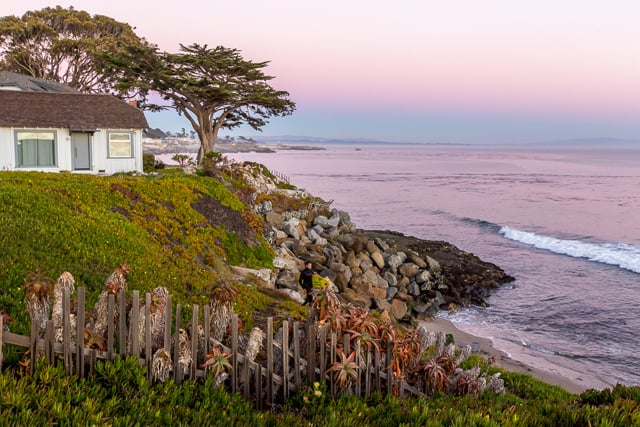
Antonelli Pond Address: 2360 Delaware Avenue, Santa Cruz Dog-Friendly Restrooms Available
Nestled in the west side of Santa Cruz County, across the street from Natural Bridges State Park, lies Antonelli Pond. This 6-acre, century-old human-made pond is home to a variety of wildlife! Bring your binoculars to this serene spot for some bird watching, or bring your fishing pole – and your permit – to go fishing along the pond’s edges. Two hiking trails run along the perimeter of the water, creating a beautiful place to take a walk, and you can picnic at one of the several tables available with scenic views of the pond. The Land Trust has created a place to find peace in the middle of bustling Westside Santa Cruz.
Laguna Creek Trail Address: 975 Martin Road, Bonny Doon
The Laguna Creek Trail is situated within the Bonny Doon Ecological Reserve in the northern part of Santa Cruz County. Here, explore redwood canyons as you meander along trails. Discover the Sandhills habitat – found only in areas where ancient marine sand deposits are situated, this terrain is a rarity unique to Santa Cruz County. Spot flora and fauna that are specially adapted to this area, and enjoy all that this moderate, 1-mile long trail has to offer!
Stopping into the quaint, cliffside town of Davenport in the northernmost parts of Santa Cruz County, you won’t want to miss the Davenport Bluffs, which provide sweeping, panoramic views of the Pacific Ocean. Located just across Highway 1 from Davenport’s main street, this rugged coastline is a beautiful spot to spread out a coastal picnic or take a scenic hike. Visit sometime from January through April for whale watching: catch a glimpse of a Humpback or Gray Whale as they make their migration along the California Coast. The Bluffs’ brilliant views make it the perfect spot to watch the sunset over the Pacific, a fantastic end to any day while visiting Santa Cruz County.
If you choose to visit one of these beautiful, natural spaces, please be prepared to leave no trace, and consider making a donation to The Land Trust of Santa Cruz County. This helps the Land Trust in their hard work, preserving these natural spaces and creating human-nature connections for years to come!