Visit Santa Cruz County
  • Places to Stay
  • Places to Eat
    • Restaurants
    • Coffee, Tea & Sweets
    • Wineries, Taps & Tastings
  • Things to Do
    • Arts & Culture
    • Beach Boardwalk
    • Beaches & Parks
    • Outdoor & Wildlife
      • Request Wildlife Guide
      • View Wildlife Guide Online
    • Dog-Friendly
    • Upcoming Events
    • FIFA World Cup 2026
  • Plan Your Trip
    • Autism Travel
    • Contact Us
    • Frequently Asked Questions
    • Getting to Santa Cruz
    • Request a Visitor Magazine
    • View Visitor Magazine Online
    • View Map Online
    • Travel Itineraries
  • Lifestyle
    • Blog
    • Destinations
      • Aptos
      • Capitola/Soquel
      • Davenport
      • Pleasure Point
      • San Lorenzo Valley
      • Santa Cruz
      • Scotts Valley
      • Watsonville
      • Monterey Bay
SURF REPORT
LIVE CAMS
weather-icon
47°F
  • SECONDARY NAV
    • Meetings
    • International
    • Weddings
    • Film
    • Press Room
    • About Santa Cruz County
    • Relocation
    • Santa Cruz History
    • Visitor Safety Tips

Places to Stay

Places to Eat

Restaurants

Coffee, Tea + Sweets

Wineries Taps and Tastings

Things to Do

Arts & Culture

Beach Boardwalk

Beachs & Parks

Outdoor & Wildlife

Request Wildlife Guide

View Wildlife Guide Online

Dog-Friendly

Upcoming Events

Plan Your Trip

Contact Us

Getting to Santa Cruz

Request a Travel Guide

View Travel Guide Online

View Map Online

Travel Itineraries

Frequently Asked Questions

Lifestyle

Blog

Destinations

Aptos

Capitola/Soquel

Davenport

Pleasure Point

San Lorenzo Valley

Santa Cruz

Scotts Valley

Watsonville

Monterey Bay

Meetings

Film

Weddings

Press Room

About Santa Cruz County

Santa Cruz History

Relocation

SURF REPORT
LIVE CAMS
weather-icon
47°F
  • Wildflower Guide to Santa Cruz County

    California spring arrives with one of nature’s most dramatic seasonal shifts, as winter rains give way to hillsides, cliffs, and open spaces filled with wildflowers. Santa Cruz County’s unique ecosystem of coastal bluffs, grasslands, wetlands, and protected open spaces creates the perfect environment for epic spring blooms. From bright orange poppies to sweeping fields of lupines, spring transforms familiar landscapes across the county. Whether you’re looking for a hike, a short stroll, or an urban area to view from a paved trail or even your car, there is an option for everyone looking to experience the bounty of wildflowers across the county. This guide provides a list of some of the best places to experience spring wildflowers in Santa Cruz County that are accessible to everyone!

    Glenwood Open Space Preserve

    Glenwood Open Space Preserve consistently offers one of the most rewarding spring wildflower displays in Santa Cruz County. The preserve is divided into east and west sections, each with a distinct landscape and bloom pattern. In spring, the west side stands out for its sweeping hillsides of purple lupine lining the trails and spreading across open slopes, with California poppies adding bright bursts of orange throughout the grasslands. The east side centers around a seasonal pond, where water lilies bloom alongside bullfrogs and birdlife, and the surrounding shores fill in with a mix of spring wildflowers. This area is especially popular for picnics during the spring months. A network of interconnected trails allows visitors to choose anything from short, flat walks to longer loop hikes, making it easy to experience a wide variety of blooms at your own pace.

    West Cliff

    West Cliff Drive offers one of the most accessible and visually rich spring wildflower experiences in Santa Cruz, with blooms appearing all along the coastal path. As you walk the paved route, Lighthouse Field becomes a major highlight, where spring brings expansive patches of wild radish spreading across the open fields in soft whites and purples. Recent native plant rehabilitation efforts have restored large sections of the bluff, resulting in vibrant, healthy bloom zones that overlook Its Beach. Along the cliff edges throughout West Cliff, sea lavender appears in scattered clusters, while mustard grass and oxalis add bright seasonal color against the deep blue of the ocean. The combination of wildflowers, restored coastal habitat, and uninterrupted ocean views makes West Cliff Drive one of the most reliable spring stops for flower viewing without leaving the pavement.

    Davenport Beaches

    The beaches and coastal bluffs north of Santa Cruz toward Davenport host some of the most striking spring wildflower displays in the county. In spring, the cliffs and open terraces erupt with color as fields of white alyssum spread across the bluffs alongside bright yellow mustard grass. These blooms spill over the rugged coastline, creating dramatic contrasts against the dark cliffs and the deep blue of the Pacific. Areas like Four Mile Beach offer short coastal walks where wildflowers line the trail, while pull-offs near Shark Fin Cove allow visitors to take in sweeping views of flower-covered slopes without leaving the road. This stretch of the north coast feels especially expansive in spring, pairing wide-open scenery with some of the county’s most memorable seasonal blooms.

    East Cliff Drive

    East Cliff Drive offers an easy, coastal way to experience spring wildflowers alongside one of Santa Cruz’s most recognizable surf corridors. The paved path runs from Pleasure Point toward The Hook, tracing the cliff edge with uninterrupted ocean views. In spring, poppies, alyssum, and mustard grass bloom along the bluffs, adding bright color to the coastline below. Patches of oxalis often appear as well, filling in the grass with small bursts of yellow. The path remains mostly flat and fully paved, making this a strong option for walkers, families with strollers, and anyone looking for a short outing with high visual payoff. The combination of seasonal blooms, coastal access, and active surf culture makes East Cliff Drive a simple but rewarding spring stop.

    Poppies at UCSC Arboreteum

    UCSC Arboretum

    The UCSC Arboretum offers one of the most educational spring wildflower experiences in the county. Spring brings peak bloom to the California native plant gardens, where seasonal wildflowers appear alongside established shrubs and trees that show how these species function within local ecosystems. Many of the same flowers found across Santa Cruz County can be seen here in one place, clearly labeled and arranged to reflect regional habitats. Beyond the native gardens, the Arboretum’s global collections add additional color and variety, allowing visitors to move between local spring blooms and plants from Mediterranean climates around the world in a single walk. Wide, well-maintained paths make the Arboretum accessible for visitors of all ages, while interpretive signage throughout the grounds supports learning and deeper engagement with the landscape.

    Person hiking at Moore Creek Trail with wildflowers scattered along the meadow

    Moore Creek Trail

    This 246-acre City of Santa Cruz greenbelt land offers hiking trails through open meadows with scenic views of the Monterey Bay. Due to the sensitive resources within the Preserve, public use is limited to hiking only – no bikes or dogs allowed. Cattle are grazed on the Preserve to benefit native plant and animal species and to reduce fire hazard. There are approximately 2½ miles round trip in this westside springtime wildflower haven. Moore Creek Preserve has two walk-in entrances: one entrance is located on the north side of Highway 1, across from Shaffer Road. The other entrance is located at the end of Meder Street. Parking is limited, please consult the Moore Creek Trail Map for entrance, parking info, and more.

    Monica Multer

    February 9, 2026
    Outdoor + Wildlife
  • Breachcombing: Best Beaches For Whale Watching

    BreachCombing: The Top 7 Beaches for Whale Watching in Santa Cruz County

    Witnessing the world’s largest mammals emerge from the ocean’s glassy expanse is a sight to behold. Like emissaries from the deep, whales say hello with a fusion of sentience and sheer power, creating a life-affirming experience whether it’s a tail slap, blow or full breach.

    As a key migration route teeming with abundant food sources, the coast of Santa Cruz County lays claim to a unique pastime: whale watching from its beaches and bluffs. Whether gray whales, blue whales or humpbacks, find your vista and the quest is on. Here are the top seven spots for breachcombing in Santa Cruz County.

    Path off of West Cliff Dr with Monterey Bay in the background

    1. West Cliff Drive/Whale Point

    Due to its proximity to downtown Santa Cruz, West Cliff Drive sets the bar high when it comes to whale watching from the shore. The paved, bluff-top path spans 3 miles between the Santa Cruz Wharf and Natural Bridges State Beach, with unobstructed views of Monterey Bay from the continent’s edge. Numerous benches dot the route, with a short spur trail that leads to aptly named Whale Point. Have a seat, or walk & watch!

    Explore Nearby: The touch pool and observation deck at the Monterey Bay National Marine Sanctuary Exploration Center help put your quest in context, while the Santa Cruz Surfing Museum celebrates the board sport that’s been practiced and perfected here since 1885.

    Fin Fact: In History of Animals (c. 343 BCE), Aristotle was the first to document that whales are mammals and not fish, noting they have lungs, breathe air through a blowhole, and nurse their young.

    Whale breaching

    2. Seacliff State Beach

    From a fleet of ocean-facing benches perched on its high bluff to the mile-long stretch of sand below, Seacliff State Beach commands expansive views of Monterey Bay and its migrating whales. Park up top and please the workout gods with the 151 wooden steps leading to the surf, or park below and cruise the paved promenade searching for your cetacean friends.

    Explore Nearby: Grab a bite at the historic Sno White Drive-In (opened 1957), then stroll the charming village of Aptos with its shops, eateries and pubs.

    Krill For Thought: As the largest mammal on earth, the blue whale’s tongue weighs as much as an African elephant. Talk about a mouthful.

    Individuals walking along the cliffs at Wilder Ranch State Park

    3. Wilder Ranch State Park

    With unique, wave-cut Santa Cruz mudstone terraces towering about the surf, Wilder Ranch State Park is level-best as a whale watching destination. Two trails leave from the main parking lot — Old Cove Landing Trail (2.4 mile loop) and Ohlone Bluff Trail (3.5 miles out & back to Strawberry Beach) — providing miles of bluff top vistas where spouts and sunsets dazzle in equal measure.

    Explore Nearby: Seymour Marine Discovery Center featuring Ms. Blue — at 87 feet long one of the world’s largest blue whale skeletons on display, and the Monarch Preserve at Natural Bridges State Beach — the only official state monarch butterfly preserve in California (mid-October through late-January).

    Cetacean Inspiration: The comeback of the California Blue Whale is an ongoing success story, with 97% of its historic population restored due to protections such as the Marine Mammal Protection Act, vessel speed reductions and real-time monitoring.

    Fishing boat on Monterey Bay seen from the Santa Cruz Wharf

    4. Santa Cruz Wharf Pier

    Stretching nearly a half mile into Monterey Bay, the Santa Cruz Wharf Pier gets you over the waves and in prime position to not only whale watch but check out surfers at the famous Steamer Lane break. Bring quarters for the sea scopes located along the pier, or grab a cup of coffee and get some change. Note: The Santa Cruz Pier is open but undergoing repairs along the last 150 feet after suffering storm damage in late 2024. Work is expected to be completed in early 2026.

    Explore Nearby: The iconic Beach Boardwalk with everything from thrill rides and arcade, to bowling alley and special events.

    Fellow Frolickers: California sea lions bark and play on the pier’s substructure (with viewing holes to better follow the action below), while sea otters, harbor seals and the occasional pod of dolphin are known to cavort here as well.

    Elephant Seals at Ano Nuevo State Park

    5. Año Nuevo State Park

    Best known as one of the world’s largest mainland breeding colonies for the northern elephant seal (Mirounga angustirostris), Año Neuvo State Park  also enjoys some sterling coastal whale watching. Try Cove Beach, where in early spring migrating gray whales come close to shore, or  trails that lead to rugged views of the sweeping Pacific Ocean: Año Nuevo Point Trail along the park’s southern bluffs, and Franklin Point Trail on its northern edge. Note: During elephant seal breeding season (December 15-March 31), reservations are required to access the beach colony via docent-led tour.

    Explore Nearby: Head inland and check out the Santa Cruz Mountain towns of Bonny Doon and Felton as you loop back to the city of Santa Cruz. Vibes aplenty.

    Spouting Off: Gray whales have two separate blowholes which, under the right conditions, can create a unique heart-shaped spout. 🐳❤️

    Footsteps on the beach at Davenport Landing Beach

    6. Davenport Landing Beach

    Set against windswept bluffs, Davenport Landing Beach  offers some of the best whale watching along the north coast of Santa Cruz County. Founded by Captain John Pope Davenport in 1867, this cove was the town center until a major fire in 1915 forced its relocation just south along Highway One. The marine terraces here funnel nutrient rich water from deep underwater canyons, enticing these gentle giants near shore. For a sweeping vista, take the bluff-top Coast Dairies Trail or chill on the beach while surfers and experienced kayakers showcase their skill.

    Explore Nearby: The charming enclave of Davenport, CA has worn many hats over the years, from whaling outpost to cement plant and an arts colony.  Grab a bite (and a room!) at the Davenport Roadhouse Inn then check out the art installation at the historic Davenport Jail (limited hours).

    Seaside Sonata: Humpback whales are the virtuosos of the sea, singing the longest and most complex songs in the animal kingdom. While repeating the same melody, some songs last over 30 minutes!

    Whale breaching in Capitola

    7. Capitola Wharf

    The 850 ft pier at Capitola Wharf extends over the protected crescent of Capitola Bay where you’re perfectly positioned to scan for visitors from the deep.  Benches line its sturdy span, while viewing stations offer free scopes to watch all the action from longboarders cruising the break to sand castles at Capitola Beach. If you’re feeling adventurous, rent a kayak at Capitola Boat & Bait and paddle out among the behemoths!

    Explore Nearby: Just steps from beach and pier, colorful Capitola Village is pure romance with its hillside Mediterranean vibe. The boutique shopping, elevated dining and tastings have come a long way since its inception as one of California’s earliest beach resorts (1874).

    Dock of Ages: Gray whales have a typical lifespan of about 50–70 years, while humpback whales live about 45–60 years and blue whales a whopping 70-90 years.  Such longevity means that future generations might see the same whale as you!

    Breachcombing Tips

    – Prime viewing is based on migration patterns and feeding schedules. Gray Whales: southbound migration December through mid-February; northbound migration mid-February thru May. Humpback Whales: early arrivals in late-March, with peak feeding season May through October. Blue Whales: July through October as they feed on krill offshore, with peak viewing in August and September.

    – Spotting a whale from shore requires planning, patience and bit of luck. Know what to look for such as blows (spouts), breaches, and tail slaps. Bring binoculars to increase your chances!

    – Gear Up: Binoculars (1 pair per person if possible), beach chair/blanket, snacks/drinking water, waterproof layers and a camera with telephoto lens are a great place to start.

    – Play it safe by using a tide chart. High tides can make sections of the beach inaccessible as the surf reaches the bluffs.

    – The best time of day for viewing is mornings or late afternoons when calm seas and muted light are most common. Find a local restaurant to pair with your viewing, or bring a picnic!

    – For a deeper dive, consider a whale watching boat tour such as Stagnaro Charters, O’Neill Charters or Ocean Safaris, then extend your quest by staying the night!

    Dan and Scott Marengo

    February 3, 2026
    Outdoor + Wildlife, Things to Do
  • Monarch Butterfly Magic at Natural Bridges

    In Santa Cruz, we like to celebrate all creatures great and small, especially those of the migrating variety. On one end, we are captivated by the sight of a whale surfacing from the depths of the sea and, on the other, we delight in the spellbinding magic of a fluttering monarch butterfly.

    Every fall and winter, Natural Bridges State Beach welcomes back the monarchs to their winter habitat in the eucalyptus grove, the only State Monarch Preserve in California. Starting in early to mid-October, the black and orange beauties start trickling in from colder climates to enjoy our moderate coastal weather. Scientifically speaking, monarchs are tropical butterflies and at no point in their life cycle – egg, caterpillar, chrysalis, butterfly – can they freeze, so they move with the warmer weather while migrating south.

    A kaleidoscope of Monarch Butterflies at Natural Bridges. Photographed by Jenn Day
    Photo by Jenn Day

    Wondering why they choose the same eucalyptus grove at Natural Bridges as their temporary home? First, it’s located in a canyon which provides shelter from the wind. Second, the trees filter in sunlight to keep monarch bodies from freezing. And third, eucalyptus trees flower in the winter, giving the butterflies a convenient source of food.

    According to a Docent Naturalist, monarchs tend to arrive at Natural Bridges in mid-October, have peak observation numbers in late-November and early-December, and migrate out of the area by mid to late-January and sometimes into February. The Monarch Grove Trail located at Natural Bridges is open for self-guided monarch tours during park hours (8am to sunset.) Parking is $10. Volunteers are often available in the grove to help answer any questions and to help visitors locate the monarch butterflies and their clusters. They can be pretty camouflaged sometimes!

    It’s also a good idea to pay attention to the weather. The minimum temperature a monarch needs to fly is 55 degrees. Temperatures below 55, mean you are more likely to see monarch clusters hanging like leaves off the eucalyptus trees, which can also be quite mesmerizing. But please note, when the monarchs are clustered it is easy to pass them up! Make sure you look closely!

    Monarch butterflies with Queen Anne's Lace flowers. Photographed by Ann Whitted
    Photo by Ann Whitted

    While we celebrate the return of the monarchs, we also acknowledge their dwindling numbers due to loss of natural habitat and the use of pesticides and insecticides. One way to help preserve the monarch population is to become a butterfly gardener by planting nectar sources, such as marigolds, cosmos and asters- organically grown, of course.

    Planting milkweed is also crucial to monarch survival, as it is the only plant on which the female monarch will lay her eggs and the monarch larvae will eat. Milkweed also contains toxins that help protect the monarch caterpillar from predators. But according to Natural Bridges naturalists and the Xerces Society, we have now learned that we should not plant milkweed too close to the coast. For our area on the Central Coast area, it is best to plant the milkweed 5 or more miles from the coastline. For more information on how you can help the monarchs in their recovery, check the Xerces Society website.

    The monarch butterfly is just one of several Santa Cruz migratory wildlife mascots. Be sure to experience their magic this fall and early winter at Natural Bridges State Beach. And BIG BONUS: Natural Bridges State Beach has a few additional mascot favorites in the eucalyptus trees! Horned owls have been nesting and calling the Natural Bridges’ eucalyptus grove home for several years, and sightings have been high this season! If you are looking to spot the horned owls, check with a Natural Bridges interpreter or docent and they can help direct where you might find them. Best of luck and be sure to tag @visitsantacruz in your monarch and owl spotting adventures this season!

    A kaleidoscope of Monarch Butterflies at Lighthouse Field. Photographed by Jenn Day
    Photo by Jenn Day at Lighthouse Field

    Updated November 2025

    Christine Candelaria

    December 1, 2025
    Outdoor + Wildlife
  • The Best of Winter Wildlife in Santa Cruz County

    Santa Cruz is known for its phenomenal wildlife viewing opportunities. Year-round whale watching, birding, otters, tide pooling, and forest wildlife have put Santa Cruz County on the map for many nature enthusiasts! But from November through February, there seems to be a crescendo of wildlife that makes Santa Cruz a wintertime must-see! Migrating gray whales, wintering monarchs, extreme tides, elephant seals, and upwards of 400 species of birds make these months the perfect time to get out and enjoy nature. So check out some of our wintertime wildlife must-sees below, grab a FREE Wildlife Watch Kit, and book your winter getaway to Santa Cruz County!

    And please remember to always explore safely – preserve, protect, and respect the wildlife!

    WHALES
    Winter is known for its frequent sightings of California Gray Whales as 20,000 of these giants pass through the Monterey Bay on their annual winter migration from the cold arctic waters, to the warm lagoons of the Baja Peninsula. Santa Cruz Whale Watching says, from December – April, “the chance of sighting the Gray Whales at this time is very high, somewhere around 90%!” That’s some good odds! Catch sight of these magnificent creatures this winter and other sea life by taking a whale watching tour or a sailing charter on a luxury yacht. An abundance of sea otters, dolphins, porpoises, sea lions, humpbacks (which are pretty much year-round) and a variety of ocean birds can be spotted as well in the unique ecosystem of the Monterey Bay. Check out NOAA‘s Seasons in the Sea for a month-to-month look at what marine life is in season. And be sure to read this blog for information on taking a whale watching and sea life excursion in Santa Cruz County.

    A swarm of Monarch butterflies at Natural Bridges State Park

    MONARCH BUTTERFLIES
    Seasonal visits to Natural Bridges State Park, California’s only state park butterfly preserve, allow visitors an intimate look at the majestic monarch butterfly. Fall marks the return of monarch butterflies that spend their winters in a protected grove inside the park, with most departing by February. Famous for both their grace and stamina, the monarchs make an extraordinary migration of thousands of miles, flying from summer habitats in the United States to warmer climates in Mexico and California for the winter. Take a peaceful self-guided walk among the eucalyptus trees for viewing. And be sure to check out our Monarch Magic blog for more info on these amazing creatures and how you can help in their recovery!

    Snowy Plover birds at Watsonville's wetlands

    BIRDING
    Located along the Pacific Flyway on California’s spectacular Central Coast, Santa Cruz County is a premier birding destination. Its rich diversity of habitats attract upwards of 400 species of resident and migratory birds. You’ll find Snowy Plover skittering across the sandy beaches at Pajaro Dunes. Waterfowl dive and dabble at Wetlands of Watsonville’s freshwater marshes. Hummingbirds dart among the exotic flora at the Arboretum at UCSC. And at the renowned Elkhorn Slough National Estuarine Research Reserve, you can walk the trails or kayak the waters to see over 340 different species of birds that pass through or find permanent refuge at the slough.

    Elephant Seals at Ano Nuevo State Park

    ELEPHANT SEALS
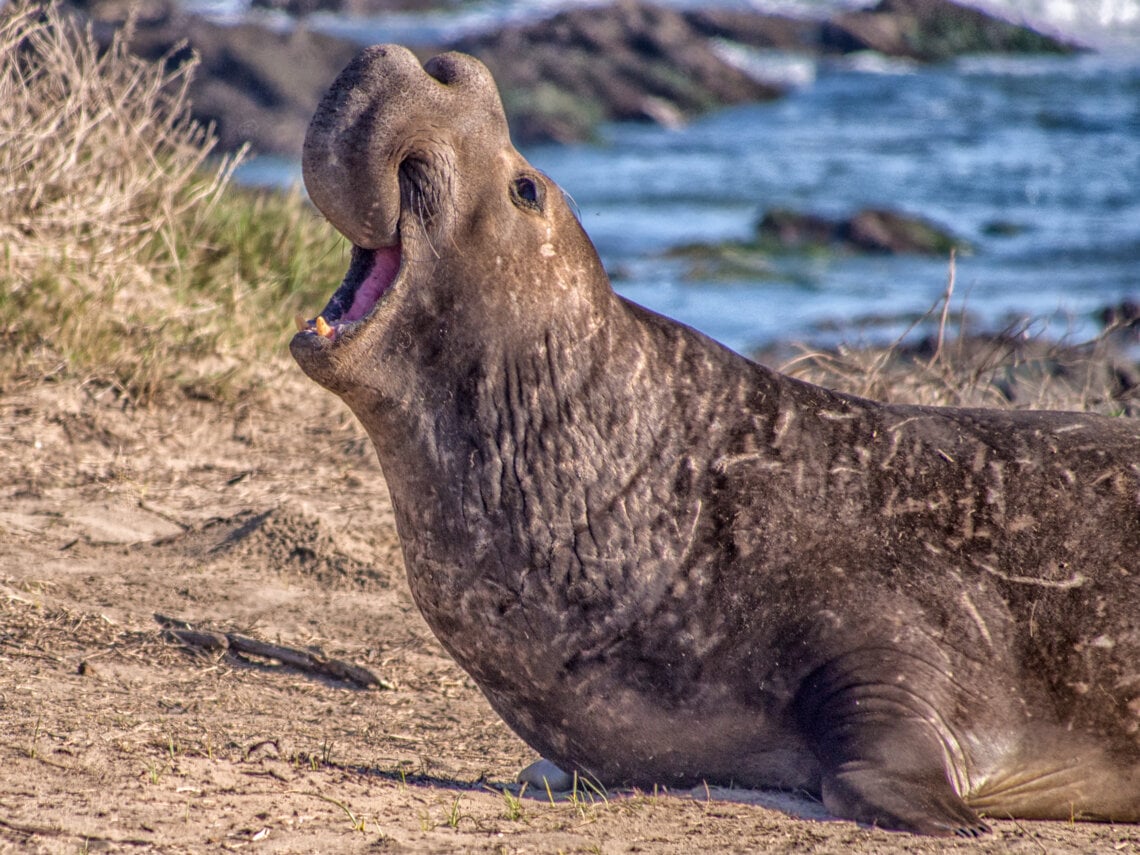
    Año Nuevo State Park is the site for one of the largest mainland breeding colonies in the world for the northern elephant seal, and lucky for us, it’s just 22 miles north of Santa Cruz along scenic Highway 1. Mating, birthing, nursing, fighting — it all happens up close and personal on a 3 mile guided tour. Knowledgeable and passionate docents lead the way over sandy dunes to the best viewing spots, answering questions and sprinkling fun facts along the way. Although the elephant seals are present year round, guided tours are available daily from December 15 through March 31, excluding December 25 and February 1 – 2, 2025 for an annual fundraising event. Reservations are recommended for weekends and holidays, but walk-in tickets are available Monday through Friday. Tickets are $7 per person plus a $3.99 reservation fee. The vehicle day-use fee is $10. For reservations and info, visit www.reservecalifornia.com or call 1-800-444-4445.

    Deer at Henry Cowell Redwoods State Park

    FOREST FAUNA
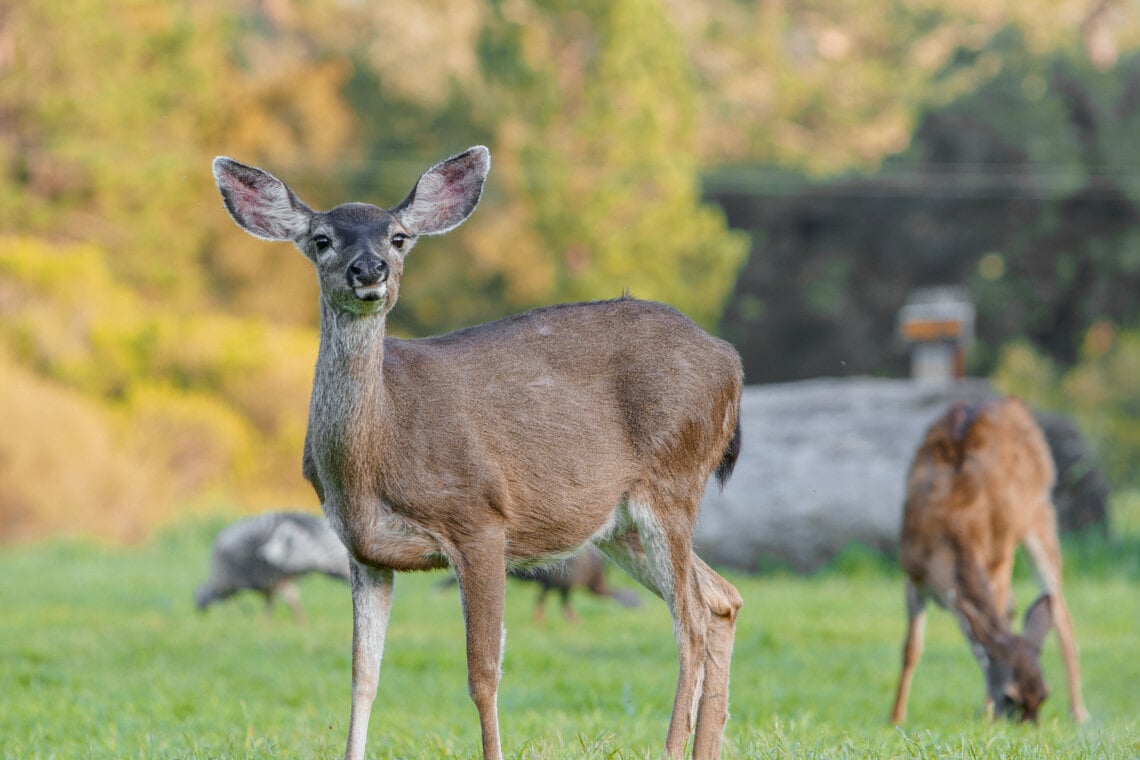
    The forests wildlife is active year-round, but the fresh winter showers can really cause a creature stir. From furry friends like deer, rabbits, squirrels, bobcats, and coyotes to the slimier finds like banana slugs, salamanders, newts, and frogs, the trails of Santa Cruz County’s state parks often lead to dozens of animal sightings. Take a peek at this visit to Henry Cowell Redwoods State Park – how many creatures can you spot? Or how about this day at Wilder Ranch State Park? For some great trails to start exploring, check out our Top 5 Hikes in Santa Cruz County.

    Tide Pool Creatures during King Tides

    OTTERS, TIDE POOLS, & MORE
    As you can see, winter brings some of the biggest wildlife stars to the scene with breaching whales and mesmerizing monarchs, but a few year round favorites are as present as ever – the always cute, sea otters, and the always fun, tide pool creatures. A simple walk along the Santa Cruz Wharf often leads to otter sightings and tide pooling spots are plentiful in the county – especially with those winter King Tides (the lowest tides of the year = best tide pooling of the year)! For a neat look at the wildlife at Natural Bridges State Beach, including some up-close peeks into the tide pools, check out this peaceful Moment in Nature video.

    Hope you can enjoy some winter wildlife in Santa Cruz this season! Enjoy off-season lodging prices and book your winter getaway in Santa Cruz County! And be sure to tag @visitsantacruz in your posts while you’re here!

    Special to Visit Santa Cruz

    December 1, 2025
    Outdoor + Wildlife
    bird watching in santa cruz, Birding, elephant seals at ano nuevo, elephant seals in santa cruz, Monarch Butterflies, monarch butterflies at natural bridges, monarch butterflies in santa cruz, Monarch Butterfly, Monarch Butterfly Tours, Monarch Preserve, monarch tours, monarch tours at natural bridges, monarchs, monarchs at natural bridges, Monarchs in Santa Cruz, santa cruz county, santa cruz county winter wildlife, santa cruz winter wildlife, Whale Watching, Whale Watching in Santa Cruz, whale watching in santa cruz county, whale watching in winter, Whale Watching Santa Cruz, Winter activities in Santa Cruz, winter hotel deals in santa cruz county, winter whale watching, winter wildlife in santa cruz, winter wildlife promotion, winter wildlife watching
  • Top 5 Winter Activities in Santa Cruz County

    Santa Cruz is a great year-round vacation destination, but the winter months offer some very special reasons to visit that you might not expect. While Santa Cruz is known for soaking up the sunshine during summer, winter provides a unique way to experience some of Santa Cruz’s best features, like huge waves, extremely low tides, and even monarch migrations! If you’re considering exploring Santa Cruz County this winter, here’s a short list of the top 5 ways to enjoy the area during the holiday season!

    Monarch Butterfkues at Lighthouse Field State Beach
    Monarch Butterflies at Lighthouse Field State Beach by Jenn Day

    1. ) Experience the Natural Wonders of Winter

    From the forests to the sea, the winter season in Santa Cruz brings an abundance of natural wonders you don’t want to miss, like witnessing the monarch migration or going tide pooling during King Tides. The Monarch butterflies congregate in Santa Cruz and the wider Monterey area around mid-October through mid-February, with a peak season of November – December. In Natural Bridges State Beach, one of the best spots for butterfly viewing, visitors can see the butterflies cluster on the eucalyptus branches and form a “city in the trees,” according to State Park officials. Monarchs can also be found at Lighthouse Field State Beach. Another great natural wonder of winter is the yearly predictable tidal event known as King Tides, which features the year’s highest and lowest tides. This year’s King Tides will take place on November 5-7, 2025; December 4-6, 2025; and January 1-3, 2026, however, there are even more dates with these extreme tides! Extreme low tides (and high tides) will be present on the days leading up to and after the dates listed. Winter is also the best time to enjoy our other small creatures, like the banana slug or the California newt, which emerge during the winter’s wetter months.

    Neptune's Kingdom at the Beach Boardwalk during Winter Wonderland. Photographed by Jenn Day
    Neptune’s Kingdom at the Beach Boardwalk by Jenn Day

    2. ) Go Christmas Lights Viewing

    Watching Santa Cruz come to life with Christmas lights is the best way to get in the spirit of winter festivities! December kicks off with the Lighted Boat Parade at the Harbor where 50 beautifully-decorated power and sailboats parade through the Santa Cruz Harbor. This year, you can watch the boat parade at 5:30 pm on December 6, 2025. Another great spot for Christmas lights and decorations is Farley’s Christmas Wonderland in Midtown, a walk-in Christmas experience. This festive exhibit celebrates the traditional wonders of Christmas and visitors can wander through elf villages, sit on fairy benches, and enjoy the holiday spirit. Over at the Santa Cruz County Fairgrounds Holiday Lights, enjoy 1/2 mile of giant Christmas trees twinkling with lights, Santa, reindeer, snowmen, lighted tunnels, and many more magical moments. Enjoy lights by train on the Holiday Lights Train that departs from the Santa Cruz Beach Boardwalk. Be sure to stick around the Winder Wonderland at the Boardwalk for more festive lights, photos with Santa, a 3-story tall Christmas tree and more!

    Across all of Santa Cruz, locals get in the holiday spirit and decorate their homes with fantastic displays of Christmas lights you have to see to believe. From iconic homes like 2580 Bean Creek Rd in Scotts Valley to neighborhoods like Depot Hill in Capitola or historic Walnut Avenue in Downtown Santa Cruz, just driving around to find your favorite decorations is a wonderful way to enjoy winter here in Santa Cruz.

    Wild mushrooms in the Santa Cruz mountains
    Wild Mushrooms in the Santa Cruz Mountains

    3. ) Enjoy All Things Fungus

    Mushroom hunting or foraging is a huge part of the Santa Cruz local culture in the winter months when higher rains lead to mushroom booms in the forests! After the first rain of the season, mushrooms begin to crop up everywhere in the natural spaces in Santa Cruz. Some of the best spots to go see mushrooms are the UCSC upper campus and Henry Cowell Redwoods State Park. Whether you’re a full-blown mycophile or just interested in discovering the bountiful world of mushrooms here in Santa Cruz, there are events happening all winter long for all levels of interest. From guided mushroom walks at Schwan Lake to the Fungus Fair happening this January 9-11th, the winter season is truly mushroom time! If you’re less interested in mushroom hikes, or expert-guided mushroom hunting expeditions, you can always enjoy delicious fungus-forward foods at Far West Fungi, which has one of the best grilled cheeses in town! Always remember to be safe when mushroom foraging and consult experts before attempting to eat or pick them for yourself. Be sure to follow collection guidelines since California State Parks don’t allow for mushroom picking for personal use but enjoy looking at the beautiful bounty that nature creates right in our own backyards!

    Fall Creek by Daniel Gorostieta

    4. ) Hike Waterfalls and River Trails

    Winter is one of the best times for hiking on trails with rivers and waterfalls, like in Henry Cowell State Park and Fall Creek. The increased rainfall rejuvenates the landscapes, turning the lush trails into a canvas of vibrant greens and cascading rivers. One of the most enchanting winter activities is embarking on hikes along the many water features that come to life during this season. Santa Cruz boasts an array of spectacular trails, where rivers and waterfalls take center stage, like the Lime Kiln Trail, which follows along a rushing river and offers several different waterfalls to enjoy. The winter rains transform these normally tranquil waterways into dynamic, rushing currents, adding an extra layer of excitement to the adventure. Whether you’re an avid hiker or a casual nature lover, exploring Santa Cruz’s water-centric trails during the winter unveils a captivating beauty that is unique to this season. This is also the perfect time to see banana slugs and newts along the damp forest trails!

    The Sunset from West Cliff Drive
    The Sunset from West Cliff Drive

    5. ) Watch Spectacular Winter Sunsets

    During the winter months here in Santa Cruz, the sunsets are truly phenomenal. The early setting sun sets the sky on fire with deep rich pink, orange, and red colors that will leave you awestruck. Santa Cruz winters bring cooler weather and rain, resulting in low humidity and crisp clean air. As a result, the winter air contains fewer particulates that can dull sunset colors or leave the air looking hazy. The daily light show of sunsets that look more like paintings than reality is best viewed in the Santa Cruz area between November and February. Find the best sunset viewing spots in the winter along West Cliff Drive or north at the beaches and bluffs along Highway 1 near Davenport like Four Mile Beach or Davenport Landing.

    Monica Multer

    November 21, 2025
    Attractions, Events, Family Fun, Outdoor + Wildlife, Vacation Ideas
  • Tide Pool Wildlife Guide: Discovering Santa Cruz’s Tidal Treasures

    When the tide retreats, the coastlines of Santa Cruz County reveal a hidden universe. Rocky coves and wave-carved shelves transform into natural aquariums filled with dazzling creatures, from tiny jeweled nudibranchs to the elusive Pacific octopus. While you can explore tide pools year-round, the extreme low tides during winter king tides offer an especially dramatic window into this world. Whether you’re wandering the family-friendly pools at Natural Bridges or scrambling over the rugged rocks at Wilder Ranch, tide pooling in Santa Cruz is a chance to see the ocean’s wonders up close.

    Blue and orange sea slug during low King Tide. Photographed by Liz Birnbaum, The Curated Feast.
    Header photo by Daniel Gorostieta; all other photos by Liz Birnbaum, The Curated Feast, unless noted

    Nudibranchs

    These delicate sea slugs look like they’ve come straight out of a fantasy novel, wearing flamboyant colors and intricate frills. Some glow with electric blues or fiery oranges, while others display spotted or striped patterns that rival stained glass. Nudibranchs are a rare treat to spot, often blending in with sponges and algae. Keep an eye out at Pleasure Point for the best chance to see them. Often as small as your pinky nail, they can be very hard to spot, so move slowly and look carefully! They prefer calmer, more harbored pools that don’t have turbulent wave action, and they can cling to the rocky pools, which provide the perfect camouflage for these tiny jewels of the sea.

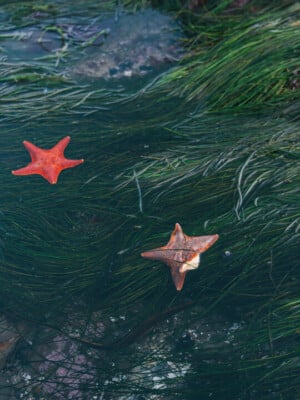
    Sea stars in sea grass during lowest tide. Photographed by Liz Birnbaum
    Sea star poking out during low tide. Photographed by Liz Birnbaum, the Curated Feast
    Sea stars at low king tide. Photographed by Liz Birnbaum, the Curated Feast

    Starfish

    Now more often called sea stars, these iconic tide pool creatures cling tightly to the rocks with hundreds of tiny tube feet. Their classic five-armed shape makes them easy to recognize, but Santa Cruz tide pools sometimes reveal rarer species with extra arms. Sea stars are most often spotted along the rocky ledges of Wilder Ranch and Scott Creek Beach, where they feed on mussels and barnacles exposed by the tide. Watching them slowly glide across the rocks is like seeing time in motion.

    Green sea anemone at low tide. Photographed by Liz Birnbaum, The Curated Feast

    Anemones

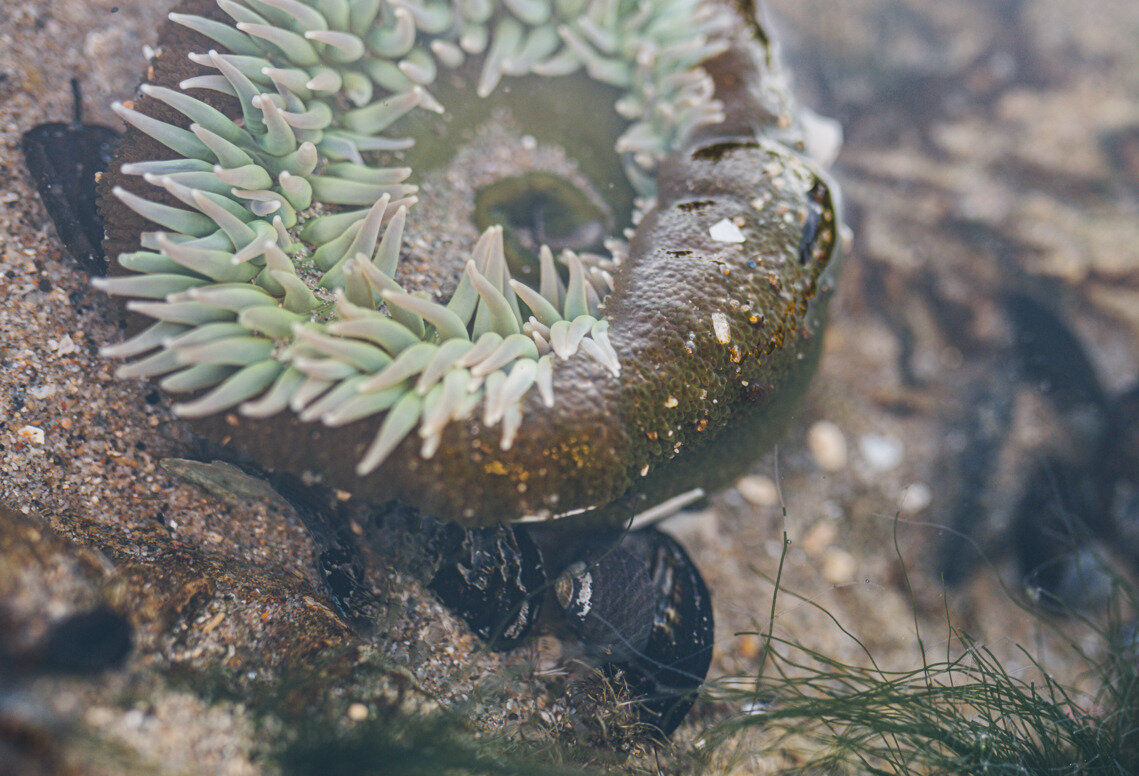
    Green sea anemones look like tide pool gardens, their tentacles waving like underwater flowers. These stinging arms capture tiny fish and plankton, though they’re harmless to people who gently touch them with a fingertip. On sunny days, anemones glow neon green thanks to algae living inside their tissues. Here in Santa Cruz, tidepoolers can discover a huge array of differently colored sea anemones from deep blues and greens to even reds! They’re easy to find at nearly every tide pool in Santa Cruz, but the tide pools at Pleasure Point and the base of Natural Bridges are especially abundant. At low tide, watch them close up into squishy little blobs, waiting for the ocean’s return.

    Kelp crab at low king tide. Photographed by Monica Multer
    Photo by Monica Multer

    Kelp Crabs and Hermit Crabs

    Santa Cruz’s tide pools are bustling with busy crabs of every size. Kelp crabs, with their long legs and sharp pincers, often hide beneath mats of seaweed, looking like armored warriors ready for battle. Hermit crabs, on the other hand, steal the show with their borrowed shells, scuttling about in a comical parade of shapes and sizes. Children love spotting these crustaceans in the calmer pools of nearly every rocky beach area in Santa Cruz County, where they’re easy to see darting between rocks and shells.

    Octopus peeking at low king tide. Photographed by Liz Birnbaum, The Curated Feast

    Octopus

    The ultimate tide pool treasure, a Pacific octopus is a rare but unforgettable sight. Masters of disguise, octopuses can change both color and texture to melt into their surroundings. With their curious, intelligent eyes and eight quick arms, they explore tide pools in search of crabs, clams, and fish. While sightings are uncommon, patient explorers may be rewarded at Pleasure Point or along the more remote coves near Davenport. Spotting one feels like a secret gift from the sea, a reminder of just how wild and mysterious the intertidal world can be.

    Blue Heron walking along low king tide. Photographed by Liz Birnbaum, The Curated Feast

    Tips for Exploring Tide Pools Responsibly

    To keep these ecosystems thriving, it’s important to visit tide pools with care:

    • Check the tides: Plan your visit during the lowest tides of the month, often around king tide weekends in winter, to reveal the widest range of pools. Every day the tides are different so be sure to plan ahead to find the lowest tides and best times to visit.
    • Wear sturdy shoes: The rocks are slippery and uneven, so closed-toed shoes with good grip will keep you safe. Waterproof shoes can also be very helpful, but be very careful where you step to ensure you aren’t stepping on any of our tidal friends.
    • Step lightly: Avoid crushing barnacles, shells, and fragile creatures underfoot by stepping on bare rock when possible. Assume everything underfoot has a potential life form hiding there and step carefully.
    • Look, don’t collect: Tide pool creatures are protected. Admire them in place rather than removing them from their homes. Look with your eyes and leave the creatures you discover in their homes.
    • Leave no trace: Pack out any trash, and remember that even a small piece of seaweed is part of the habitat. Leave everything as you found it and try not to disturb any of these delicate, precious habitats.

    By exploring with respect, you help protect these tidal treasures so future visitors can experience the same magic.

    Monica Multer

    October 13, 2025
    Beaches, Outdoor + Wildlife, Things to Do
  • A Wildlife Guide to Santa Cruz County: Exploring Nature’s Sanctuary

    From towering redwoods to rugged coastlines, Santa Cruz County is one of California’s richest places to experience wildlife in its natural habitat. The forests, wetlands, beaches, and tidepools here create a patchwork of ecosystems that support creatures both familiar and rare. Sea otters float in kelp beds just offshore, banana slugs inch through the damp forest floor, and monarch butterflies gather by the thousands in eucalyptus groves each winter. Out at sea, migrating whales and playful dolphins share the waters, while the Monterey Bay National Marine Sanctuary helps safeguard the marine life that makes this coastline world-famous. Whether you’re hiking under the redwoods, strolling the shoreline, or scanning the horizon from a cliffside lookout, Santa Cruz offers a chance to encounter some of California’s most remarkable wildlife year-round. Here’s your guide to some of the most fascinating creatures and the best places to find them.

    Elephant Seals at Año Nuevo State Park

    Elephant Seals at Año Nuevo State Park

    From December through March, Año Nuevo State Park hosts one of the most extraordinary wildlife events in North America. Thousands of northern elephant seals return to these beaches each winter to breed and give birth. Males weighing up to 4,000 pounds clash in noisy battles, while mothers care for their pups along the sand. The park requires guided walks into the rookery during the breeding season, which adds to the experience — naturalists share stories about the seals’ life cycle and behaviors as you walk along the dunes. The trails themselves are scenic, winding past coastal bluffs and sweeping ocean views. Even outside of the breeding season, Año Nuevo is worth a visit, with hiking paths, wildflowers in spring, and sea lion sightings year-round.

    Sea Otters Along the Cliffs and Kelp Beds

    Sea Otters Along the Cliffs and Kelp Beds

    Santa Cruz is a stronghold for the southern sea otter, and spotting them is one of the county’s great joys. Once hunted nearly to extinction for their thick fur, sea otters have made a remarkable comeback thanks to the protections of the Monterey Bay National Marine Sanctuary. Today, these charismatic animals are a symbol of the sanctuary’s success, and their playful presence is one of the most rewarding sights along the coast. Walk or bike West Cliff Drive or East Cliff Drive and keep an eye on the kelp forests just offshore — otters often float on their backs, cracking open shellfish or grooming their famously dense fur. If you’re lucky, you might even see a mother with a pup riding on her belly as they drift through the kelp. Their revival here is a living reminder of how conservation efforts can bring a species back from the brink.

    Whale breaching in the Monterey Bay

    Whales in the Monterey Bay

    The Monterey Bay is one of the best whale-watching destinations in the world, and Santa Cruz’s shoreline provides front-row seats. Humpbacks are regular visitors in spring through fall, gray whales pass by during their winter and spring migrations, and blue whales occasionally sweep through in summer. From the cliffs of West Cliff Drive or the wide beaches at Rio del Mar and Seacliff State Beach, you can often see spouts, breaches, or the flick of a tail on the horizon. Boat tours from Santa Cruz Harbor and Moss Landing bring you closer, often accompanied by pods of dolphins or flocks of seabirds diving for fish. Many tours operate year-round, so whether you’re here in summer or winter, there’s always a chance to see these giants. Even without a whale sighting, the sheer beauty of being out on the water with the curve of the bay stretching around you is worth the trip.

    Great White Sharks at New Brighton Beach

    Great White Sharks at New Brighton Beach

    Santa Cruz’s coastline is full of surprises, and one of the most fascinating is the seasonal arrival of juvenile great white sharks. In the warm, shallow waters off New Brighton State Beach, these young sharks gather during the hottest summer months to rest and feed on small fish and rays. Far from the fearsome image they have in movies, these sharks are still growing and pose little risk to people enjoying the beach. In fact, they’ve become a symbol of the healthy marine environment that Santa Cruz is known for. Visitors who want a closer look can even join guided tours, like those offered aboard the O’Neill Catamaran, where naturalists help you spot sharks safely from the boat while sharing insights into their behavior. Onshore, New Brighton remains one of the county’s most welcoming spots for families, with a wide sandy beach, scenic bluffs, and a popular campground. Whether you’re watching the waves or heading out on a boat tour, seeing sharks here is less about danger and more about wonder — proof that the Monterey Bay is a true sanctuary for marine life.

    Banana Slug in the Redwoods

    Banana Slugs in the Redwoods

    Venture inland into the redwoods, and you’ll meet Santa Cruz’s most playful mascot: the banana slug. These bright yellow mollusks thrive in the damp understory, moving slowly but playing an important role in the forest by breaking down leaf litter and recycling nutrients. At Henry Cowell Redwoods State Park, trails like the Redwood Grove Loop practically guarantee a sighting, especially in the cool, shaded morning hours. The park is a delight beyond slugs, too. Ancient trees tower overhead, and the San Lorenzo River winds through the landscape, offering picnic spots and swimming holes. Nearby Fall Creek, a northern unit of Henry Cowell, is a bit wilder and less crowded, where slugs and newts slip through fern-filled canyons.

    Seals and Sea Lions lazing in the sand

    Seals and Sea Lions

    Ocean life thrives along the Santa Cruz coast, where seals and sea lions are a familiar and unforgettable sight for anyone exploring the shoreline. At Wilder Ranch State Park, a colony of harbor seals can often be seen resting in the small rocky alcoves tucked below the coastal bluffs. From the park’s scenic bluff trail, visitors can look down to spot their speckled gray bodies stretched out on the sand or slipping quietly through the surf. These seals haul out to rest and warm themselves in the sun, especially during low tide, and the elevated viewpoints along the trail make it easy to observe them without disturbing their natural behavior. You can also see sea lions at the Santa Cruz Wharf, where they lounge on the wooden beams below the pier, barking and splashing in the harbor waters. The sea lions frequently travel between the wharf and the west cliff, so visitors can watch their daily migration as they dart through the waters and splash around in a lively display. Together, these spots offer an up-close look at the thriving marine life that defines the Santa Cruz coast. 

    California Newt in low tide

    Seasonal Highlights: Monarchs, King Tides, and Newts

    Santa Cruz’s wildlife calendar shifts with the seasons, offering new spectacles throughout the year. In fall and winter, Natural Bridges State Beach becomes a sanctuary for thousands of monarch butterflies, clustering together in eucalyptus groves. Walking through the Monarch Grove Trail during peak season feels like stepping into a living kaleidoscope. Winter also brings king tides, when extreme low tides reveal tide pools full of anemones, crabs, and the occasional octopus at Natural Bridges, Wilder Ranch, or Davenport Landing. With careful steps, these tide pool visits feel like exploring a hidden underwater city full of wildlife. During rainy months, parks like Wilder Ranch, Fall Creek, and Nisene Marks come alive with California newts making their way to seasonal streams. Trails glisten with raindrops, and the forest seems to hum with new life.

    Monarch Butterfly in the pine trees

    Protecting and Enjoying Santa Cruz Wildlife

    Every encounter with wildlife in Santa Cruz is part of a bigger story: these forests, beaches, and waters are home to delicate ecosystems that need protection. Whether you’re whale-watching from a cliff, walking quietly among monarchs, or exploring tide pools with children, the best way to enjoy these experiences is with care. Stay on trails, respect viewing distances, and remember that we’re visitors in their world. By treading lightly, we help ensure that these wild wonders remain part of Santa Cruz County for generations to come.

    Monica Multer

    October 8, 2025
    Outdoor + Wildlife, Things to Do
  • Mark Your Calendar: California King Tides are Coming!

    California King Tides are coming to the shores of Santa Cruz County this fall and winter season! These naturally occurring and predictable events are when the highest and lowest tides hit our shores and create an even more dramatic coastline. At high tide, the powerful waves often crash against seawalls and extend beyond their usual natural borders. The extreme low tides expose tide pools rarely seen and allow miles of beach walking and extended exploration. The 2025 official King Tide dates are November 5-7, 2025; December 4-6, 2025; and January 1-3, 2026. Here are the low tide times for December and January:

    Take a peek below for more information on timing your visit (yes, timing matters), where to go and what to look for, and for responsible tide pooling information.

    And for those from out of the area, California King Tides is the perfect time to plan a winter getaway in Santa Cruz County! Book your stay and don’t miss this extraordinary time of year on the coast!

    Sea stars during king tide

    Time Your Visit

    As we mentioned, timing matters! The best thing to do is consult a tide chart where you are able to see the exact times of the highest and lowest tides. For ease, we put the low tides for the official King Tide dates below. At least an hour before and after low and high tides yield extreme tides worthy of exploration! And another Insider’s Tip: as mentioned above, the day(s) before and day(s) after the official King Tides dates often still present extreme tides as well.

    December 4: Low tide @ 4:04pm; -1.6
    December 5: Low tide @ 4:54pm; -1.8
    December 6: Low tide @ 5:45pm; -1.7
    January 1: Low tide @ 3:08pm; -1.5
    January 2: Low tide @ 3:55pm; -1.7
    January 3: Low tide @ 4:41pm; -1.7

    TIde pool at low tide

    Where to Go and What to Look For

    TIDE POOL AT LOW TIDE
    Tide pooling is at its best during King Tides. The exceptionally low tides reveal an underwater world of creatures and habitats well worth the find. From the usual sightings like crabs, hermit crabs, mussels, anemones, sea snails, and starfish (the leather starfish have been a particularly popular find last year!) to the more rare discoveries like urchins, sea cucumbers, nudibranch (pictured above!), and octopus, the low tides are a fascinating peek into the Monterey Bay. But please remember to watch your step and leave the creatures alone. We want to protect and preserve this beautiful coastline and the wildlife and ecosystems that call it home. Here are 6 of the top spots for tide pooling during King Tides:

    1. Pleasure Point: Starts at 32nd Street and offers a huge expanse of tide pools uncovered by the receding waves during low tide events.
    2. The Hook: This famous surf spot also doubles as a perfect tide pooling location! To find this spot, head to the Hook County Park parking lot at the end of 41st avenue and find the closest staircase across the street.
    3. Natural Bridges State Park: Located at the end of Santa Cruz’s iconic West Cliff Drive, this easily accessible beach is a perfect place to squeeze in some tide pool time while staying close to the heart of the Santa Cruz area.
    4. Capitola: Known for its quaint seaside small-town vibe, Capitola is equally the perfect place to explore at low tide! Visitors can walk from the Capitola Esplanade onto the beach to New Brighton State Park when the ocean recedes.
    5. Scott Creek Beach: If you’re looking for a little more adventure, head North of Santa Cruz on Highway 1 to Scott Creek Beach for an unforgettable tide pool experience. This gorgeous beach features high craggy cliffs that tower over huge expanses of elevated tide pool areas full of a wide variety of sea life.
    6. Greyhound Rock: Another North County treasure, Greyhound Rock is a wonderland of rocky tide pools teeming with marine life. Low tide is key for the pools to be visible.

    And don’t forget to reference that tide chart! Read more on the tide pool locations listed above in our Tide Pooling Guide.

    More beach during lowest tides

    TAKE A WALK ON THE BEACH – A LONG ONE
    During the lowest tides, you are able to cover a lot more ground on your beach walk! Many spots that are usually un-walkable become walkable as beach sand is revealed to guide your steps. A few of our favorite long stretches are from Aptos to Capitola, the collection of Live Oak Beaches, and Watsonville beaches to Aptos. And for the little explorers, try the shorter low tide walk from New Brighton State Beach to Capitola Beach.

    HIgh surf at Pleasure Point

    WATCH THE HIGH SURF FROM THE COAST
    If you’d rather post up on the coast and watch the impressive high tides, places like West Cliff, Pleasure Point, and Davenport will be excellent spots to view the high surf. But be sure to watch from a safe distance since the waves can reach new levels, and when coupled with a typical winter swell of larger waves, can be dangerous if too close. Remember to never turn your back on the ocean!

    Sea stars in sea grass during low tide

    Protect and Preserve the Wildlife and Ecosystem: Best Tide Pooling Practices

    Please remember to watch where you step and tread lightly on this delicate and beautiful ecosystem. Please leave creatures alone and only take photos of your King Tide experiences. Help us protect and preserve this beautiful coast so everyone can enjoy for years to come!

    California King Tides Project

    The California King Tides Project helps us visualize future sea level by observing the highest tides of today. You can help by taking and sharing photos of the shoreline during King Tides to create a record of changes to our coast and estuaries.

    Enjoy some more photos from January 2025’s King Tides at Greyhound Rock Beach by Liz Birnbaum, The Curated Feast:

    Gray Heron walking low tide
    Octopus at lowest tide
    sea star in sea grass at lowest tide

    Special to Visit Santa Cruz

    October 7, 2025
    Beaches, Events, Outdoor + Wildlife
  • Your Guide to Fall Colors in Santa Cruz County

    As autumn’s arrival brings shorter days and crisp breezes to the central coast, the seasonal shift welcomes vivid transformations of color across the natural landscape of Santa Cruz County! While California’s central coast may not be the first place that comes to mind when you think of fall foliage, there are certainly golden-hued treasures to behold, and Santa Cruz County has its own distinct version of autumn beauty. From hidden pockets of vibrant color tucked in the redwood forests to the autumnal palette of local vineyards settled on rolling hillsides and the leaf-peeping hot spots of downtown’s historic district, there are plenty of options to soak in the sights of the season. Take some time to experience the fall colors in Santa Cruz County!

    Redwood Forests

    The captivating magnitude of the towering evergreen redwood trees of the Santa Cruz Mountains are certainly worth exploring in their own right, but there is an added magic to the forest as autumn’s coming adds pops of color amongst the green. Deciduous trees that thrive amidst the redwoods include the Big-Leaf Maple, whose sizable leaves turn a spectacular shade of amber, and the California Bay and Pacific Madrone, whose golden leaves scatter vibrant tones across the trees. Felton’s Henry Cowell Redwoods State Park is an excellent location to check out these autumn hues: be sure to hike the River Trail, which winds along the banks of the San Lorenzo River as the park is awash in autumnal shades of red, orange, and yellow. The park’s Fall Creek Unit is another fall foliage hotspot: its Lime Kiln trail weaves past historic lime kilns as the redwood canopy is infused with the striking shades of autumn. It makes for a truly tranquil experience! For a more challenging adventure, head to Maple Falls in the Forest of Nisene Marks: this 10-mile-roundtrip trail will have you weaving your way through fern-lined canyons, over fallen logs, and across creek beds as the eponymous maples transform the scenery with their golden season tones. Whichever redwood adventure you choose, there is bound to be bursts of brilliant color around the forest!

    Parks

    Santa Cruz County’s parks offer a variety of scenic settings to soak in the beauty of autumn’s colorful arrival. Start your journey in the Santa Cruz Mountains at Felton Covered Bridge Park, where seasonal tints of gold and orange can be spotted while walking through the tallest covered bridge in the United States. Head up Highway 9 to Quail Hollow Ranch for a tranquil hike through its oak woodlands and meadows as they shift from lively greens to shades of copper and ochre, making it a prime location for fans of autumnal beauty. Harvey West Park & nearby Evergreen Cemetery make for a slightly-spooky stop on the fall foliage trail! With a canopy of changing oaks and maples hanging overhead, explore one of California’s oldest cemeteries before picnicking at the park.

    Those seeking the tranquility of autumn will find refuge in the foliage around Schwan Lake in the Twin Lakes neighborhood as the calm waters and gorgeous colors create a serene leaf-peeping atmosphere. It’s particularly fantastic on foggy mornings! In Soquel, explore the trails in the back of Anna Jean Cummings Park, traversing hillsides covered in oaks and sycamores that paint the landscape in warm autumn colors. Further south, discover Watsonville’s Pinto Lake, where rich fall colors pop amidst the open meadows and tall trees, creating a peaceful backdrop for a lakeside picnic. These parks flaunt Santa Cruz’s fantastic fall foliage! 

    Photo by Daniel Gorostieta

    Farms & Orchards

    A not-to-be-missed activity during the fall season in Santa Cruz is a visit to one of our many u-pick farms and orchards! As the warmth of early autumn turns crisp and the leaves begin to change, the local farms and orchards transform into a picturesque wonderland as the fruits of their labor reach peak ripeness. Apples are fully in season, and many charming farms and orchards await with a delectable assortment of apple varieties to choose from. Search for the golden and crimson tones that turn into a delicious snack once picked! Make a day out of a visit to Gizdich Ranch, where you can enjoy a sandwich or snack from their deli to fuel up before handpicking apples to bring home. Don’t forget to grab some pie from their shop before you depart with your bounty! That’s not the only colorful produce in season come autumn: it wouldn’t be Fall without picking a pumpkin to decorate your doorstep! There are an abundance of coastal farms and pumpkin patches where you can search for your favorite gourd with an epic ocean background. Whether you’re picking apples, enjoying fresh produce, or simply soaking in the views, Santa Cruz’s farms and orchards promise a memorable experience filled with the tones of the harvest season!

    Historic Downtown District in Santa Cruz

    There are few places better for leaf peeping than Santa Cruz’s very own Historic Downtown District. The tree-lined streets are dotted with wonderfully preserved Victorian homes, their colorful façades creating a charming backdrop for the vibrant shades of amber, copper, and rust that make an appearance in autumn. Stroll along the quaint streets with a coffee in hand while you take in the breathtaking views of the trees, draped in colorful foliage. Walnut Avenue is a particular favorite of locals, as several of the historic homes also get “dressed up” for spooky season with jack-o-lanterns and skeletons on the porch! With its extraordinary architecture that is well-framed by the autumnal palette of its foliage, Santa Cruz’s Historic Downtown District truly captures the essence of the season. 

    Vineyards

    Blending the region’s celebrated wine culture with the beauty of the autumn season, head to the vineyards of Santa Cruz County for a distinctive fall foliage experience. As the coastal fog rolls in and autumn’s cooler weather settles over the terroir, the grapevines undergo a remarkable transition: the fruit ripens on the vine as the leaves turn brilliant shades of gold, amber, and crimson. Nestled along the rolling hills of the Corralitos countryside, the coastal cliffs of Davenport, and the open meadows of the Santa Cruz Mountains, there are plenty of options when it comes to enjoying a glass of wine while taking in the spectacular seasonal views.

    From its redwood forests, enchanting parks, and historic downtown district to its rolling hills of vineyards, farms, and orchards, Santa Cruz County truly has its own unique and spectacular way of welcoming autumn! As the landscape transforms into a canvas of rich colors, take time to explore these local treasures, savoring the sights of the season. Santa Cruz County may not be the first destination you think of for fall colors, but with so many hidden treasures of foliage to discover, it has certainly earned its place as a leaf-peeping destination!

    Caryn Hewlett

    October 2, 2025
    Family Fun, Outdoor + Wildlife, Parks, Things to Do
  • Spotlight on Parks: Cotoni-Coast Dairies

    Located in Davenport, where the Pacific Ocean meets rolling coastal grasslands, lies a place with stories as deep as its redwood roots: Cotoni-Coast Dairies (pronounced Chuh-toe-knee). Part of the 5,800-acre on-shore unit of the California Coastal National Monument, Cotoni-Coast Dairies is both a wild refuge and living history. 

    The land carries the name of the Cotoni, the indigenous people who called these hills and meadows home long before Europeans arrived. The Bureau of Land Management now cares for this place, and it’s clear they have worked hard to preserve the heritage of all those who have called this land home – human and animal alike. Here, perennial streams wind down from the redwood-forested Santa Cruz Mountains, weaving through shady oak woodlands and sunlit prairie before spilling into the ocean. The Cotoni Coast’s diverse topography makes for a biologically rich mosaic of ecosystems. Redwoods stretch skyward, hawks soar overhead, and freshwater streams sustain fish and flow onward to nourish the city of Santa Cruz and its neighbors. For visitors, hikers, bikers, and nature lovers alike, Cotoni-Coast Dairies offers an opportunity to experience the wild beauty of the California Central Coast. 

    Mountain biker down a trail. Photographed by Ben Ingram

    Trails

    With over 8 miles of trails lovingly built by Santa Cruz Mountains Trail Stewardship, a local non-profit, the Cotoni Coast-Dairies are waiting to be discovered! One trailhead leads from the parking lot to all other paths, which are organized as a stack of loops, each feeding into the next. This means that to get to the most challenging trail, you’ll need to traverse the two other trails, both on your way in and on your way out. Whether you’re hiking, biking, or riding horseback (permit required), each path offers its own distinctive encounter with the land. Two of the pathways are dog-friendly, just be sure to keep your furry friends on leash! 

    A hot tip: when hitting the trails, be prepared to encounter poison oak along the way. 

    Easy – Hawk / Káknu (2.5 mile loop)
    The first path you’ll encounter is the Hawk Trail—in Cotoni, Káknu (pronounced KAHK-noo). This 2.5-mile beginner-friendly loop meanders through the coastal prairie, where cattle graze in tall, swaying grasses and the ocean shimmers endlessly on the horizon. Beneath the sweep of a vast sky, it’s easy to understand why the hawk takes to the air. With its wide tread, the trail is certified for adaptive mountain biking and welcomes hikers and on-leash dogs alike.

    Moderate – Tree / Huyya (1.6 mile loop) 
    The next loop along the way weaves into a forest, the path narrowing as you become dwarfed by the majestic redwoods towering above. Appropriately named the Tree Trail, Huyya (HOO-yah) in Cotoni, this 1.6-mile moderate trail made for hiking and biking provides relief from the elements and cooling shade under the cover of the ancient trees. It’s on-leash dog-friendly, too! As you make your way through the woods, a quiet bench offers a perfect pause to glimpse the ocean framed by the forest canopy.

    Challenging: Wildcat / Toróma (4 mile loop)
    Those seeking a challenge should head out to the Wildcat Trail – Toróma (toh-ROH-mah) in Cotoni- which stretches 4 miles and reaches the highest points in the park. The ascent rewards with panoramic views, but it’s a journey that demands preparation: bring ample water, snacks, and time. The moderate/difficult-rated trail was created for hikers and bikers only, so please leave your four-legged friends on the other trails. At the summit of the plateau, the view rivals the unforgettable memories formed along the way.

    Two individuals sitting on a bench overlooking Cotoni-Coast Dairies. Photographed by Ben Ingram
    Cows out on Cotoni-Coast Dairies. Photographed by Ben Ingram
    Mountain biker on a trail lined with redwoods at Cotoni-Coast Dairies. Photographed by Ben Ingram

    Know Before You Go

    Cotoni-Coast Dairies is open seven days a week, sunrise to sunset. You’ll find the trailhead at: 
    1 Cement Plant Rd, Davenport, CA 95017

    • Parking: 62 spaces available
    • Restrooms: Located near the trailhead
    • Water: There is none on-site – bring your own, and plenty of it! 
    • Essentials: Sunscreen, snacks, and good shoes
    • Wildlife: Cattle graze across the property – share the space with respect to the animals! 
    • Be prepared and download trail maps ahead of time! 

    To explore the trails of Cotoni-Coast Dairies is to move through layered histories: those of the Cotoni people, of the forest and sea, and of today’s stewards working to keep these lands open for all. Thanks to the dedicated efforts of the Bureau of Land Management and Santa Cruz Mountains Trail Stewardship in restoring and building these trails, they are now accessible for the public to enjoy every day of the week. Here, every step tells a story, and every visit becomes part of the ongoing legacy of this incredible landscape.

    Aerial view of Cotoni-Coast Dairies with the ocean. Photographed by Ben Ingram
    All photos by Ben Ingram

    Caryn Hewlett

    September 3, 2025
    Heritage Tourism, Hiking, Outdoor + Wildlife, Parks, Things to Do
  • Shorecuterie: Santa Cruz County Picnicking

    Boasting 29 miles of shoreline and signature Cali sun, Santa Cruz County plays host to a time-honored tradition: picnicking. Whether you’re enjoying coppa and prosecco with your soulmate or wings and lemonade with the fam, there’s nothing better than laying out your blanket on its sun-kissed sands or atop its oceanfront bluffs. Add to the mix tranquil redwood groves and playful city parks, and your basket is sure to be brimming.

    Individuals enjoying the beach near the Lifeguard tower at Natural Bridges State Beach
    Natural Bridges State Beach

    Pacific Fresh: Coastal Picnics

    Along its rugged northern shores and down to the cradled coastline of Monterey Bay, the beaches and bluffs of Santa Cruz County are the “best table in the house,” whether that’s a family swim or romantic sunset. As you gaze out over the Pacific from the continent’s edge, there’s nothing quite like a Santa Cruz picnic.

    Natural Bridges State Beach

    Located just 3 miles from downtown Santa Cruz, Natural Bridges State Beach links city and sea as the northwestern tip of Monterey Bay gives way to open waters of the Pacific. Besides its tide pools and signature rock formations, picnickers here can experience the Monarch Grove Natural Preserve. From late fall through winter, thousands of butterflies festoon the eucalyptus grove a short distance from the picnic tables. A fiesta of black & orange you’ll never forget.

    Waddell State Beach

    Spreading out your blanket at Waddell State Beach offers a twist on classic beach picnicking as the majestic trees of Big Basin Redwoods State Park cascade down to the sea behind you. Waddell State Beach is unique for another reason — the opportunity to watch kite surfers catch serious air at one of California’s top extreme sports destinations. Bites of potato salad are paired with exclamations of “did you see that?!” during your action-packed matinee.

    Seacliff State Beach

    Seacliff State Beach is where the past and future collide. Long known as the home of the Palo Alto — a sunken WWI era concrete ship that once boasted a swimming pool and dance floor  — the beach endured severe winter storms in 2023 but is now on the road to recovery. Picnic tables are available, as is an inviting expanse of sand tucked up against bluffs. Bring your beach buffet, gaze across blue horizons and support the comeback.

    Seascape Beach & County Park

    Featuring a playground, picnic tables and a trail down to the beach, Seascape County Park in Aptos humbly checks all the boxes when it comes to family picnics. Perched on an open bluff, the views across Monterey Bay glow at sunset and the good times can extend even longer if you book at Seascape Beach Resort next door where their beach fire pits crackle with surfside s’mores.

    Two individuals picnicing at Loch Lomond Recreation Area
    Loch Lomond Recreation Area

    Peak Umami: Mountain Picnics

    From a lake with secluded coves to silvery beams of sunlight filtering through the redwood canopy, the Santa Cruz Mountains provide a peaceful refuge for noshing al fresco. It feels a world away from the beach, yet you’re only a 20 minute drive from downtown Santa Cruz. Birds chirping, breeze rustling, bread breaking…the vibe is pure chef’s kiss.

    Henry Cowell Redwoods State Park

    With 40 acres of old-growth redwood trees, 30 miles of hiking trails and a popular swimming hole, Henry Cowell Redwoods State Park is a magnet for outdoor recreation and picnic enthusiasts. A designated picnic area can be found just inside the Main Entrance, as well as a few tables atop the Observation Deck. Wander down the steep trail to the Garden of Eden swimming hole for a summer dip, and make the Redwood Gods happy by packing out your trash.

    Loch Lomond Recreation Area

    A smaller version of its namesake in southern Scotland, Loch Lomond Recreation Area is like stumbling upon a mystical waterway woven into a secret forest. Every culinary delight from tapenade to taleggio is welcome at several designated picnic areas, or find a lakefront cove and watch the fish ripple the crystalline waters. Though swimming is not allowed, boat rentals are available, or get in some post-picnic steps on the 12 miles of hiking trails that surround the lake.

    Junction Park

    Home to California’s first State Park (Big Basin), colorful locals and estate wine tasting, Boulder Creek is the perfect expression of Santa Cruz Mountain life. Located where the San Lorenzo River, Bear Creek and namesake Boulder Creek meet, the sandy beach at Junction Park has welcomed family picnics over the decades. Formerly known as “The Old Swimming Hole,” Junction Park also plays host to local events such as the free summer concert series Music In The Park.

    DeLaveaga Park entrance during sunset
    DeLaveaga Park Entrance

    Kids’ Menu: Playground Picnics

    With dozens of city parks and scores of county parks dotting the landscape, Santa Cruz playground picnics are a local pastime that meet you where you’re at. Your picnic blanket transforms into “home base” as the kids run and climb, slide and swing, and generally get their sillies out. Pack a basket full of your favorite treats and voila! An economical solution to the age-old problem: how to get the youngins’ to burn off some steam!

    DeLaveaga Park

    Tucked into the woods just five minutes from Highway One, DeLaveaga Park is a historic retreat with an unsurpassed lineup of outdoor activities for kids and adults alike. At nearly 600 acres, it was once the late 19th century hacienda of Mexican-born businessman Jose Vicente DeLaveaga, who bequeathed a portion of the estate to Santa Cruz upon his death. With reservable group picnic sites such as Twisted Tree and Forty Thieves, the stage is set for large celebrations and events, or share stories over snacks with your crew at one of the tables along Branciforte Creek. Enjoy the playground, bocce ball, disc golf, volleyball and horseshoe pits, not to mention nearby DeLaveaga Golf Course — one of California’s top public links.

    Ocean View Park

    Ocean View Park sits on a bluff above the San Lorenzo River with views of the legendary Santa Cruz Beach Boardwalk and its signature rides. Once the site of the historic Ocean View Villa resort, the park now caters to kids who race side-by-side down the 30 foot slides and work up a mean appetite climbing the play structures. Secure a picnic table or lay out your blanket on the grass, then consider a spin on the Looff Carousel at the Boardwalk for your ambitious second act.

    Chanticleer Avenue County Park

    Located in the Live Oak neighborhood of Santa Cruz, the recently renovated Chanticleer Avenue County Park is a rising star in the pantheon of play. The facilities include picnic tables, on and off-leash dog areas, a bicycle pump track and LEO’s Haven — a large, inclusive play area for children of all abilities. Rave reviews all around.

    Exterior view of Wild Roots Market in Felton
    Wild Roots Market in Felton

    Shorecuterie Supplies

    Since getting out the door and on the road is priority number one, picking up your supplies locally in Santa Cruz County makes a lot of sense. Sandwich shops like Zoccoli’s Italian Delicatessen or Gayle’s Bakery & Rosticceria slice it how you like it, while a stop at Santa Cruz Ace Hardware can help with  everything from beach chairs and toys to grilling supplies and ice chests. And for endless grab-and-go delights, The Picnic Basket has top-notch items perfect for the mobile adventurer.

    Local, independent markets are the cornerstone of Santa Cruz life. Staff of Life Natural Groceries and New Leaf Community Market have multiple locations with a wide range of groceries and prepared foods. Since 1938, Shoppers Corner Market has long been a local fave, and its wine & cheese selection is aged to perfection.

    With locations in Felton and Boulder Creek, mountain picnics are tastefully supplied by the good folks at Wild Roots Market. Sustainable and local is the name of the game here, with sandwiches such as The Roaring Camp and The Henry Cowell Club paying homage to local attractions.

    Blanket Advice

    • Summer mornings can bring coastal fog that eventually burns off, while spring and fall temps are typically mild and fog-free. Be sure to pack warm layers and enjoy the shoulder seasons in Santa Cruz County!
    • Before you arrive check the webpage for park hours, vehicle entry fees, and alcohol and pet policies.
    • Many parks offer reservable picnic tables both for individuals and groups. Contact the park directly for booking information.
    • For visitors who like things official, National Picnic Day falls on April 23 while National Picnic Month spans all of July. For the rebels out there…the rest of the year awaits!
    • Use a picnic checklist to guarantee successful snacking…and don’t forget the bottle opener!
    • Since we all like talking about dinner during lunch, check out Places To Eat in Santa Cruz County for your follow-up meal.

    Art of the Picnic

    Silver-haired sojourners listening to birdsong from their picnic table in a peaceful redwood grove… sweethearts sipping wine as they watch the sun dip below a wall of fog far out to sea…beach toys strewn across the family blanket as the Boardwalk beckons. The beauty of Santa Cruz picnics is that no two are alike. The seasons provide their own allure. Surprisingly warm October days invite shorts and tank tops, while in spring ferns unfurl gracefully next to rushing creeks, providing the perfect soundtrack for snacking. Of course what treats you put in your basket and who you invite to come along, that’s up to you. But where you land, that part is pure Santa Cruz.
    Dan and Scott Marengo

    June 16, 2025
    Beaches, Family Fun, Food & Drink, Outdoor + Wildlife, Parks, Things to Do, Vacation Ideas
  • Top 5 Tide Pools in Santa Cruz County

    The expansive coastline in Santa Cruz County offers endless options to explore coastal environments for tide pool treasures. Exploring the tide pools of Santa Cruz unveils creatures like giant sea anemones, colorful sea stars, and dragon-like nudibranchs. Visiting tide pools during low tides or during the annual King Tides event is a wonderful activity perfect for people of all ages looking for a distinctly Santa Cruz experience. With these top 5 tide pools to explore here in Santa Cruz, you’ll never miss a low tide opportunity for adventure again!
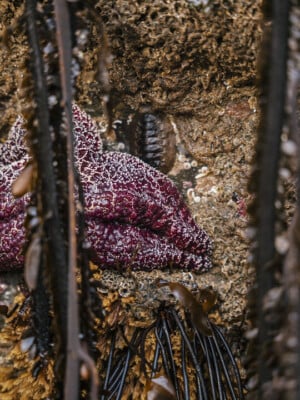
    Remember to recreate responsibly while exploring all of the wonders these different tide pools offer here in Santa Cruz County. Tide pools are not just incredibly beautiful sights to see but are also very sensitive habitats full of living creatures. So, remember that when viewing tide pools, always leave no trace, respect the creatures you encounter by giving them space, and watch where you step! Also, stay safe while tide-pooling by never turning your back on the waves, wearing appropriate shoe attire to avoid slipping, and always being aware of incoming tides to ensure you can safely leave the area before the tide rises.

    Tide pools at Pleasure Point

    1.) Pleasure Point

    The Pleasure Point area, which starts at 32nd Street, offers a huge expanse of tide pools uncovered by the receding waves during low tide events. Choose any of the stairways along East Cliff Drive, like the very first one next to the giant tiki statue, to head down to the flat beach that stretches far out into the ocean. These popular tide pools offer an abundance of sea anemones, kelp crabs, and starfish. This tide pool location is one of the best in the area for finding the elusive nudibranch, which is a type of sea slug without a shell that comes in a variety of dazzling colors and looks like a tiny sea dragon! If you’re tide-pooling with kids, this is a wonderful, safe space for them to explore the ocean’s wonders since there are no large drop-offs and the terrain is flat once you reach the beach.

    Tide pools at the Hook

    2.) The Hook

    This famous surf spot also doubles as a perfect tide pooling location! To find this spot, head to the Hook County Park parking lot at the end of 41st avenue and find the closest staircase across the street. This stairway leads to the beach, where you will head left for a secret low tide spot that features peculiar rock formations covered in bright green algae. Sheltered in the spaces between the waving rocks are alcoves perfect for tide pool creatures like hermit crabs just waiting to be discovered.

    Natural Bridges State Beach at sunset

    3.) Natural Bridges State Park

    Located at the end of Santa Cruz’s iconic West Cliff Drive, this easily accessible beach is a perfect place to squeeze in some tide pool time while staying close to the heart of the Santa Cruz area. The iconic rock arch that Natural Bridges State Park is named after is only accessible when the tides are very low. If you’re lucky enough to go tide pooling here, especially during King Tides, you can walk through the arch to find bright, colorful sea stars, vibrant sea anemones, and mussels. Along the shoreline of this state park, visitors can also find lively tide pools on jutting cliff faces. To find these, all you have to do is head down to the shore and then turn right to walk as far as you desire on the small cliffs, where you will find endless pools waiting to be explored.

    Low tide at Capitola  Beach

    4.) Capitola Beach/ New Brighton State Park

    Capitola is known for its quaint seaside small-town vibe but is equally the perfect place to explore at low tide! Visitors can walk from the Capitola Esplanade onto the beach to New Brighton State Park when the ocean recedes. You can discover at this beach ancient fossils of shells embedded in the clay-like cliffs that are only visible at low tide. Exploring this unique low tide ecosystem is perfect for families looking for a unique experience since the area is entirely flat and offers boulders to climb around on and fossils to find!

    Starfish at Scott's Creek Beach

    5.) Scott Creek Beach

    If you’re looking for a little more adventure, head North of Santa Cruz on Highway 1 to Scott Creek Beach for an unforgettable tide pool experience. This gorgeous beach features high craggy cliffs that tower over huge expanses of elevated tide pool areas full of a wide variety of sea life. From sea urchins to sea stars and, if you’re lucky, a tiny octopus, you will be astonished at the bounty of ocean treasures just waiting to be discovered.

    BONUS LOCATION!

    Tidepools at Greyhound Rock in North County

    6.) Greyhound Rock Beach

    Greyhound Rock is another North County treasure and is an excellent spot for low tide exploring. With the iconic rock visible from Highway 1 and the beach’s cliff-side parking lot, many may recognize Greyhound from a distance. However, for those willing to do a steep downhill descent (and later ascent), Greyhound Beach is a wonderland of rocky tide pools teeming with marine life. Low tide is key for the pools to be visible, but at high tide, the beach is just as enticing with sheer cliff walls, endless Monterey Bay vistas, and secluded walks along the Pacific coastline.

    Tide pools
    sea stars
    One older individual with one younger individual looking at tide pools

    Monica Multer

    January 7, 2025
    Beaches, Events, Family Fun, Outdoor + Wildlife, Parks, Things to Do, Vacation Ideas
1 2 3 4
Next Page

Visit Santa Cruz County logo

Visit Santa Cruz County is a private, non-profit corporation, serving as the official visitor marketing entity for Santa Cruz County. Visit Santa Cruz County works to enhance tourism, the visitor experience, and the area economy by positioning and promoting Santa Cruz County as a year-around visitor, conference and film destination.

USA Brand USA Badge
Central Coast California Badge
VIsit California Badge
IBCCES Badge
Visitor Information Center

705 Front Street
Santa Cruz, CA 95060
(Next to Museum of Art & History)
800.833.3494 or  831.425.1234

Hours
Thursday: 12:00 p.m. – 4:00 p.m.
Friday: 12:00 p.m. – 4:00 p.m.
Saturday: 12:00 p.m. – 4:00 p.m.
Sunday: 12:00 p.m. – 4:00 p.m.
Monday: 9:00 a.m. – 1:00 p.m.

contact us⟶
Visitor Magazine Cover Footer
free visitor magazine⟶
SCC Wildlife Watching Guide cover
free wildlife guide⟶
E-Newsletter Sign-Up

Get your monthly guide to Santa Cruz County’s events, attractions, and more.

Stay In Touch
  • Facebook
  • Instagram
  • LinkedIn
  • Pinterest
  • X
  • YouTube
  • TikTok

2026 Copyright © Visit Santa Cruz County. All Rights Reserved.

Accessibility

Careers

Meeting Agendas

Partners

Privacy Policy