


In a state as vast as California, a four-day itinerary might have you bagging forested peaks or paddling kelp-draped reefs but doing both demands some trip-planning acrobatics. Santa Cruz County, however, plays by different rules. Here, coastal mountains cascade down to the sea while a mosaic of 14 state park destinations create an outdoor playground where you can you picnic on a sun-kissed beach and hike among fog-crowned redwoods — all in the same day!
From the sandy shores of Natural Bridges to the sandstone watchtowers of Castle Rock, it’s time to pack your flannel, slide into your flip-flops, and map out your Santa Cruz County reef-to-peak getaway.
Day One:
Adventure on Arrival
Just two miles apart and located where the Santa Cruz Mountains meet the mighty Pacific, the reef-to-peak pairing of Seacliff State Beach and the Forest of Nisene Marks State Park slots into your arrival day effortlessly by minimizing extra travel time and maximizing adventure.
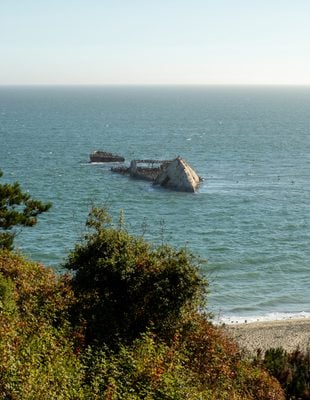
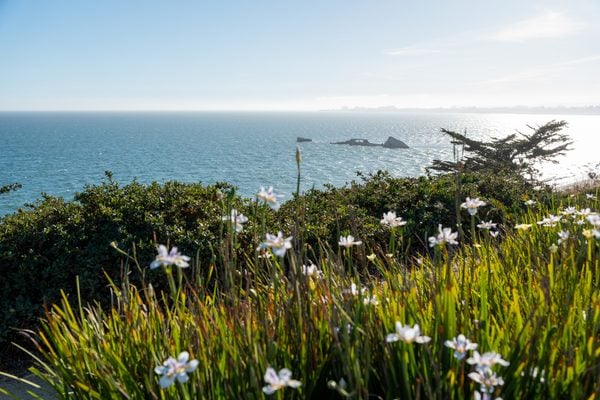
Stretching along the gentle curve of Monterey Bay, the soft expanse of Seacliff State Beach provides a grand stage for the opening act of your four-day stay. From its breezy bluffs eight-stories high, you can take in never-ending Pacific views as whales migrate and colorful sails dance against the distant fog. Once you get toes in sand, a range of activities abound from summer swims to family picnics and romantic sunset walks. History buffs will recognize Seacliff as one of California’s earliest state beaches (1931) and are eager to point out the S.S. Palo Alto — a decommissioned WWI-era tanker located just offshore that once featured a restaurant, ballroom and saltwater swimming pool. The “cement ship” now serves as a marine habitat for Monterey Bay’s world-famous sea life, proof that nature always finds its way.
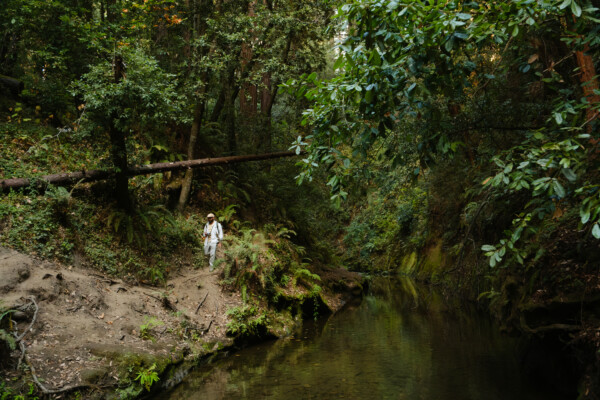
A mere ten minute drive brings you to the Forest of Nisene Marks State Park. Encompassing 10,000 acres, this sanctuary of coast redwoods and fern-lined creeks feels worlds apart from the beach. Hikers can enjoy 30 miles of maintained trails that climb towards Santa Rosalia mountain and its 2,600 ft summit, while birdwatchers can spot everything from warblers to woodpeckers and hawks to owls. The changing seasons create a fresh experience every visit as winter rains feed cascade hikes such as Maple Falls, and bigleaf maples bring a pop of fall color along the creek beds. Mountain bikers are allowed on designated tracks including the 5.7 mile climb up to Sand Dollar Overlook — one of the top views in the county.
Curious & Compelling: The epicenter of the devastating Loma Prieta earthquake is located in the upper section of Nisene Marks along the Big Slide Trail. The magnitude 6.9 quake struck just before Game 3 of the 1989 World Series between local rivals the San Francisco Giants and the Oakland Athletics, interrupting a nationally televised broadcast of the Bay Area’s most anticipated baseball event of all time.
Explore Nearby: Equal parts 19th century mill town and modern coastal village, Aptos offers a welcoming counterpoint to big nature with its walkable cafes, boutique shops and historic buildings. Check out the Aptos History Museum for interesting tales of yesteryear, and what can still be seen today.
Day Two:
Boardwalks & Banana Slugs
With both destinations close to downtown Santa Cruz, day two provides the perfect city/nature balance as spirited surf culture complements the vivid colors of the creatures you’ll encounter whether hiking, tide pooling or riding roller coasters.
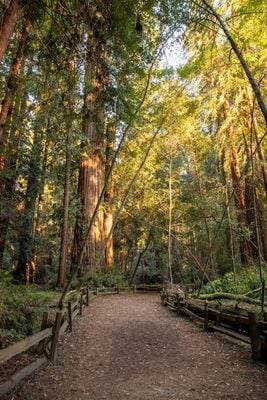
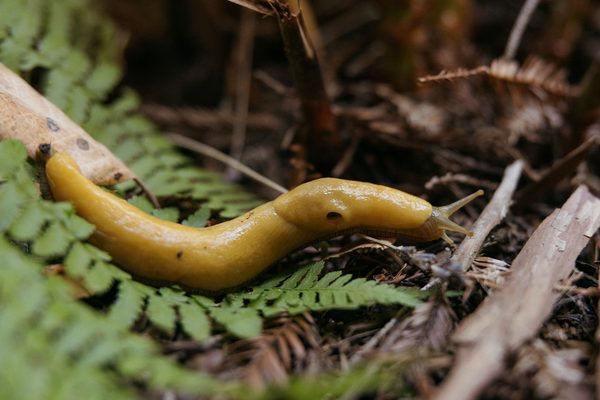
Just 20 minutes from downtown, Henry Cowell Redwoods State Park is a shining example of the reef-to-peak contrasts found only in Santa Cruz County. Crashing waves give way to forest serenity as 50 miles of trails (including the Fall Creek Unit) weave through shafts of filtered sunlight. There’s a hike for everyone, from the challenging climb past historic lime kiln ruins to the Big Ben tree (7.5 miles round trip/1,400 ft elevation gain), or the wheelchair accessible Redwood Grove Loop Trail (0.8 miles/30 ft elevation gain). This easy jaunt brings visitors to a pair of prominent old-growth gems: The Giant, which towers 277 feet and at 1,500 years old was taking root during the fall of the Roman Empire; and the Frémont Tree, whose base was hollowed out by a lightning fire and reportedly provided shelter for explorer John C. Frémont during his historic 1846 expedition through California. Be on the lookout for undulating banana slugs in damp understory (or across the trail after it rains). These flamboyant gastropods are local celebrities, not to mention the fearsome mascot of the University of California, Santa Cruz.
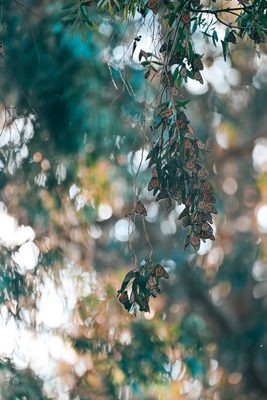
The adventure continues back down the hill within the charming confines of Santa Cruz city. Starting at the Santa Cruz Wharf, spot sea lions barking beneath the pier as the famed waves of Steamer Lane line up on the horizon. Follow the paved footpath up to Lighthouse Point and the Santa Cruz Surfing Museum, then continue along West Cliff Drive to a magical destination — Natural Bridges State Beach. With its iconic sea arch just offshore, Natural Bridges provides a bounty of surfside options. Picnicking is a tradition at tables set among the trees, and if you time it right the tide pools at the end of the beach provide a window into Monterey Bay’s colorful marine life. But what makes Natural Bridges truly unique flutters overhead. As the only designated State Monarch Preserve in California, tens of thousands of black and orange butterflies drape the eucalyptus branches in a grove set behind the beach every year from November through January. Follow the short, accessible boardwalk through this windfall of winter color and prepare to be amazed.
Slug Power: When University of California, Santa Cruz, joined the NCAA in 1980, its team mascot was deemed the Sea Lions. But in 1986 — through a feisty vote and cheers of “slime ‘em!” — the students overrode the Chancellor and the banana slug triumphed. Today, Sammy the Slug continues to strike fear into the hearts of opponents (and maybe some chuckles, too).
Explore Nearby: Combining vibrant surf culture, university innovation and Silicon Valley savvy, the city of Santa Cruz strikes a unique pose. From amusement park thrills at the Beach Boardwalk to art museums, and dog-friendly cafes to tasting rooms, there’s no shortage of exciting things to do.
Day Three:
Shark Fins & Sandstone Spires
Today’s journey demands a bit more driving, but the well-earned reward is northern Santa Cruz County’s rugged natural beauty. Here, tectonic shorelines meet weather-carved peaks creating geologic wonders worthy of timeless postcards.
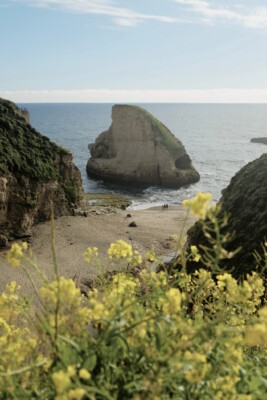
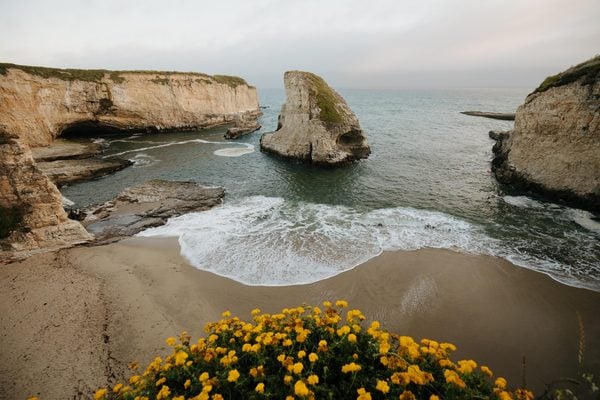
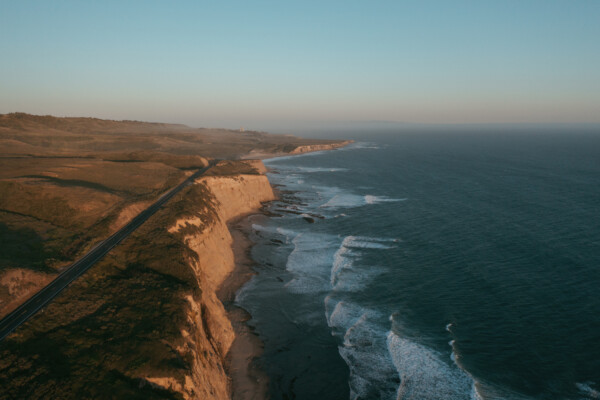
Located ten miles north of Santa Cruz along Highway 1, Cotoni-Coast Dairies (part of Wilder Ranch State Park) features a set of unique “pocket beaches” each with its own personality. Whether photographing the striking dorsal-shaped sea stack at Shark Fin Cove, taking a romantic walk beneath Santa Cruz Mudstone cliffs at Panther Beach, or snacking on a shorecuterie board while picnicking at Bonny Doon Beach, visitors can enjoy any number of activities that match their mood. Explore the coastal village of Davenport where Captain John Pope Davenport founded a lumber shipping company in the late 1860’s, then check out the graffitied pylons of the “ghost pier” — a relic from the cement factory that once flourished here. Note: This area is known for rough surf and rogue waves. Visit at low tide during calm seas. Swimming not advised.
Climbing 25 miles from the coast brings visitors to Castle Rock State Park, where wind, rain and tectonic shifts along the San Andreas fault have sculpted its sandstone spires over the millennia. Their unique honeycomb texture — called tafoni — provide an other-worldly feel to the caves of Castle Rock as it rises to 3,214 feet. Find your perfect rock climbing grip, or for a more relaxing time let the spring-fed Castle Rock Falls provide a soothing soundtrack. With 35 miles of hiking trails, the topography is wonderfully diverse, and vistas such as Goat Rock and Russell Point look out over the Pacific ocean and across the San Lorenzo River watershed.
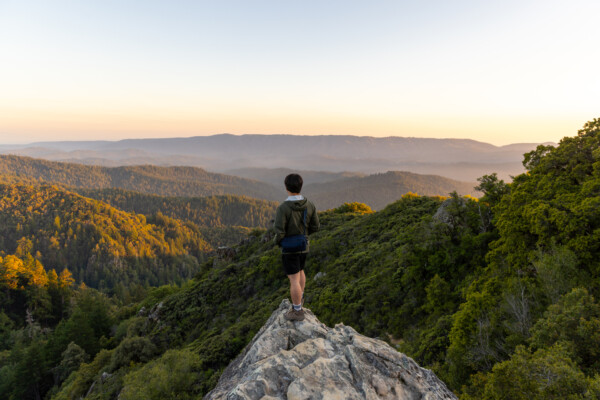
Tech Trailblazer: Castle Rock State Park boasts a century-long history of conservation, beginning with Judge Joseph Welch who bought 60 acres along Castle Rock Ridge in 1908 then opened it up for the public to enjoy. Sixty years later and inspired by his childhood adventures in the caves of Castle Rock, pioneering Silicon Valley physicist Russell Varian and his wife Dorothy paved the way — with the help of the Sierra Club and Sempervirens Fund — for the creation of a state park in 1968.
Explore Nearby: The frontier feel of Boulder Creek rides point along Central Avenue (Hwy 9), where redwoods smother the surrounding ridges and fireplace smoke lingers in the air. Check out the “old swimming hole” at Junction Park, mingle with locals at Boulder Creek’s seasonal festivals, or find that rare treasure while antique shopping — there’s plenty to see and do along this half-mile mile strip.
Day Four:
Sunset Goodbye
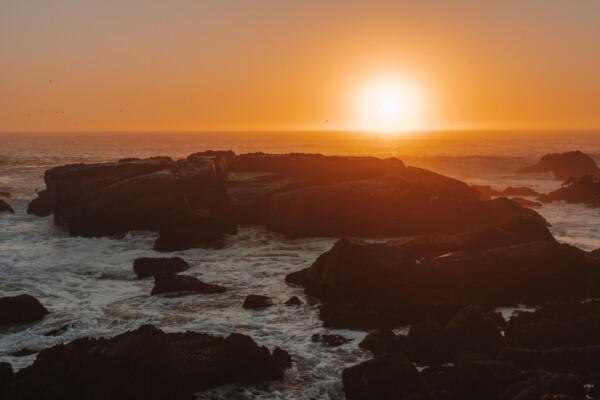
When it comes to iconic drives, the Pacific Coast Highway (Hwy 1) is pure California dreaming. After checkout, grab a bite to eat then take your time winding along its gentle curves perched high above the breakers. The setting sun softens the blow of saying goodbye as you wrap up your multi-day adventure.
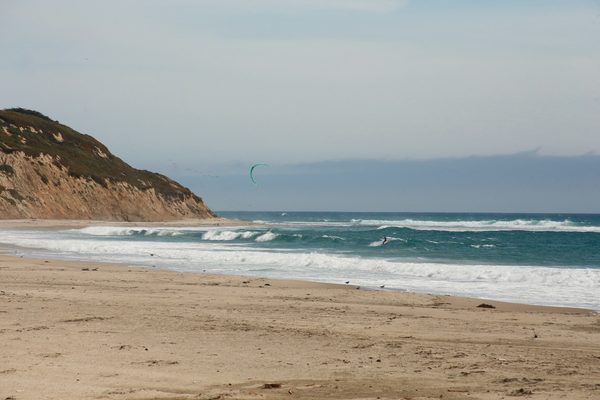
A half-hour north of Santa Cruz, kinetic Waddell Beach beckons windsurfers and kiteboarder from across the globe. Fin-shaped sails streak across the surf and brightly colored kites dance overhead as steady northwest winds combine with big waves to generate daredevil launches. You’ll want to get out your phone and film this spectacle to show friends and family back home. Fins of another sort — whale fins — can be spotted along with spouts, breaches and tail-slaps during Santa Cruz county’s seasonal whale migrations.
In a stroke of topographical luck, Rancho del Oso is just across the highway making the peak portion of today’s quest as efficient as it gets. This coastal canyon descends from the heights of Big Basin State Park down to Waddell Beach, where redwoods give way to marshlands becoming a birder’s paradise. Check out the Nature & History Center (open Saturdays and Sundays noon to four) or stretch out your legs on the Hoover Loop Trail. This 0.8 mile loop rises through a Monterey pine forest actively recovering from the 2020 CZU Lightning Complex Fire while providing an aerial view of Waddell Canyon and the Pacific Ocean below.
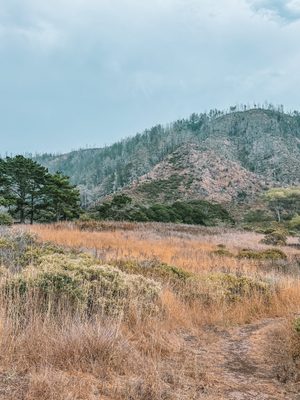
Grizzly Demise: From its importance to the Ohlone Costanoan people, followed by Spanish exploration, to its present-day name, Rancho del Oso boasts a history of abundance. William Waddell established an extensive lumber operation here in the 1860s, complete with a sawmill and a five-mile tramway that hauled timber from the mill to a coastal wharf. Waddell died in 1875 from injuries inflicted by a grizzly bear, a grim reminder of the California grizzlies that once roamed these mountains. The valley’s current name, Spanish for “Bear Ranch,” dates to 1912 when Theodore Hoover (brother of President Herbert Hoover) acquired much of the property.
Explore Nearby: The northern elephant seal rookery at Año Nuevo State Park is home to these fascinating — and huge — sea creatures. Almost hunted to extinction in the 19th century, the colony has now become one of the world’s largest mainland breeding colonies when winter numbers can reach up to 10,000. Guided tours are required from December through March.
Getting Here
Situated along the crescent of Monterey Bay in the heart of California’s Central Coast, Santa Cruz County feels “worlds apart” with its relaxed vibe yet is easily reached from the urban centers of San Francisco, San Jose and Los Angeles. Whether you’re driving the redwood-reveal of Hwy 17, cruising past the wineries and ranch lands of Hwy 101 or letting the Pacific Ocean be your co-pilot on the gentle turns of Highway 1, the beauty of the journey rivals the thrill of the destination.
Nearest Airports:
San Jose Mineta (SJC) — 30 miles
Monterey Regional (MRY) — 40 miles
Oakland San Francisco Bay (OAK) – 65 miles
San Francisco (SFO) — 70 miles
Sacramento (SMF) — 150 miles
Fresno Yosemite (FAT) — 160 miles
Los Angeles (LAX) — 350 miles

Santa Cruz
Trip Planning Essentials
- From luxe resorts to coastal camping, Santa Cruz County has a diverse range of Places To Stay.
- Check out Places To Eat for everything from coffee and cocktails to brunch and barbacoa.
- With its Beach Boardwalk, state parks and lively culture, there is no shortage of Things To Do in Santa Cruz County.
- Expect mild temperatures year-round, but pack layers for summer fog and winter rain.
- Consider building your itinerary around Upcoming Events for local flavor.
- Visit our Accessible Visitor Center to discover more about Santa Cruz County’s award-winning commitment to inclusivity and autism travel.
- Check out our other Itineraries for trips based on length of stay and a variety of interests.
- Read our latest Blogs for thoughtful and informative stories about spirited Santa Cruz County.